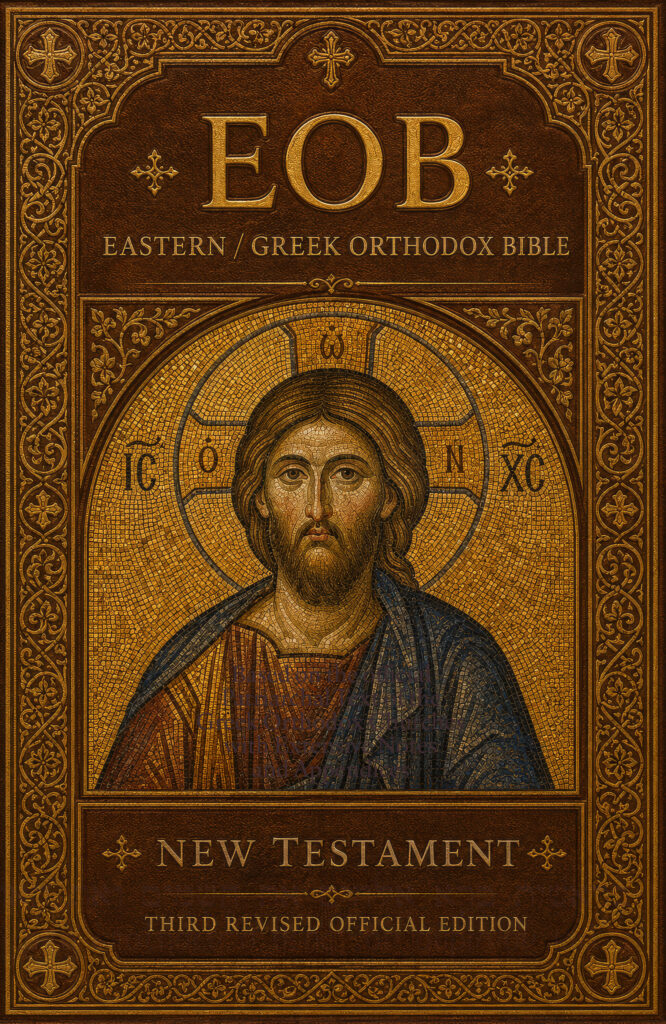
EOB: Official Site of the Eastern / Greek Orthodox Bible (Old and New Testament)

Genesis 4:10

EOB (Eastern / Greek Orthodox Bible):

He said, “What have you done? Your brother’s blood cries out to me from the ground.”

EOB Footnote:

The MT includes “the voice of your brother’s blood” using a plural form for “blood” (literally “bloods”), which some interpreters understand as referring to Abel and his potential descendants, or as an intensifier suggesting violent bloodshed. The LXX renders this with a singular form. The MT also reads “crying out to me” where the LXX has “crying out to me” with the same meaning but slightly different word order. No DSS manuscript witness exists for this verse.

Other Translations:

KJV (King James Version):

And he said, What hast thou done? the voice of thy brother’s blood crieth unto me from the ground.

WEB (World English Bible):

“The voice of your brother’s blood cries to me from the ground.”

Benton LXX (Vaticanus):

And the Lord said, What hast thou done? the voice of thy brother’s blood crieth to me out of the ground.

Douai-Rheims (Vulgate):

“The voice of thy brother’s blood crieth to me from the earth.”

Apostoliki Diakonia (LXX):

The voice of your brother’s blood is crying out to me from the ground.

YLT (Young Literal Translation )(MT):

“He said, ‘What have you done? The voice of your brother’s blood is crying to me from the ground.'”

BBE (Bible in Basic English):

“The voice of your brother’s blood is crying to me from the earth.”

EOB COMMENTARY:

EOB Commentary:

THE VOICE OF YOUR BROTHER’S BLOOD

This verse stands as one of the most profound declarations in all of Scripture concerning the sanctity of human life and the cosmic consequences of murder. The blood of Abel does not merely stain the ground—it cries out to God, bearing witness against the one who shed it. Here we encounter the Orthodox understanding that innocent blood possesses a voice, a spiritual reality that reaches the throne of the Almighty.

Typological Significance for Christ: The Epistle to the Hebrews draws an explicit connection between Abel’s blood and the blood of Christ, stating that Jesus’ blood “speaks better things than that of Abel” (Hebrews 12:24). While Abel’s blood cried out for justice and vengeance, the blood of Christ cries out for mercy and reconciliation. Saint John Chrysostom elaborates that Abel’s blood accused his murderer, but Christ’s blood pleads for the forgiveness of His murderers. This typological reading reveals Abel as a proto-martyr whose innocent death prefigures the Lamb slain from the foundation of the world.

Patristic Interpretation: The Fathers consistently saw in Abel a type of Christ. Saint Irenaeus of Lyon understood Abel’s sacrifice and subsequent murder as foreshadowing the acceptable sacrifice of Christ and His death at the hands of His own brethren. Saint Cyril of Alexandria similarly notes that just as Cain slew his brother out of envy, so the leaders of Israel delivered Christ to death because of jealousy.

Liturgical Connections: In the Orthodox funeral service and memorial prayers, we invoke the righteous Abel among the first of those who pleased God, recognizing him as the first human to enter into death through violence and the first to await the resurrection. The Paschal liturgy celebrates Christ’s descent into Hades, where Abel waited among the righteous for liberation.

Theological Implications: This verse establishes the Orthodox teaching that human blood is sacred because humanity bears the image of God. The earth itself becomes a witness to violence, groaning under the weight of human sin. This cosmic dimension of sin—affecting not merely the sinner but creation itself—finds its resolution only in the redemptive blood of Christ, which sanctifies and heals all creation.

The question God poses to Cain, though He already knows the answer, reveals the divine pedagogy of bringing the sinner to confession and repentance—a pattern repeated throughout Scripture and embodied in the sacrament of confession within the Orthodox Church.

Introduction to the book of Leviticus

The Book of Leviticus receives its English title from the Latin Vulgate, which is derived from the Greek Septuagint (LXX) title Leuitikon (Λευιτικόν), meaning “Levitical” or “pertaining to the Levites.”

Read More »

Introduction to the book of Exodus

The Book of Exodus receives its English title from the Greek Septuagint (LXX), where it is called Exodos (Ἔξοδος), meaning “departure” or “exit.” This name was chosen because the central

Read More »