Genesis 5:31 – Commentary
And all the days of Lamech were seven hundred seventy and seven years: and he died.
Numerical Symbolism and Spiritual Significance
The lifespan of Lamech, recorded as 777 years, has drawn considerable attention from patristic and later Orthodox commentators due to its striking numerical pattern. While the genealogies of Genesis 5 may appear as mere historical records, the Fathers consistently understood them as bearing deeper spiritual meaning pointing toward the economy of salvation.
The number seven in Scripture signifies completion and divine perfection, rooted in the seven days of creation. The threefold repetition of seven in Lamech’s years has been interpreted as an intensification of this symbolism. Some Fathers contrasted this with the sevenfold vengeance promised to the other Lamech, the descendant of Cain in Genesis 4:24, who boasted of seventy-sevenfold vengeance. Where the Cainite Lamech represents the multiplication of sin and violence, the Sethite Lamech whose years total 777 represents the fullness of the righteous line that would preserve humanity unto the coming of Christ.
Connection to Noah and the New Creation
Lamech’s primary significance lies in his role as the father of Noah, whose name he prophetically interpreted as bringing rest and comfort from the curse upon the ground. This prophetic utterance, given at Noah’s birth, anticipates both the preservation through the Flood and ultimately the true Rest who would come to lift the curse entirely—our Lord Jesus Christ. Lamech thus stands as a witness to the hope maintained within the faithful lineage from Adam through Seth.
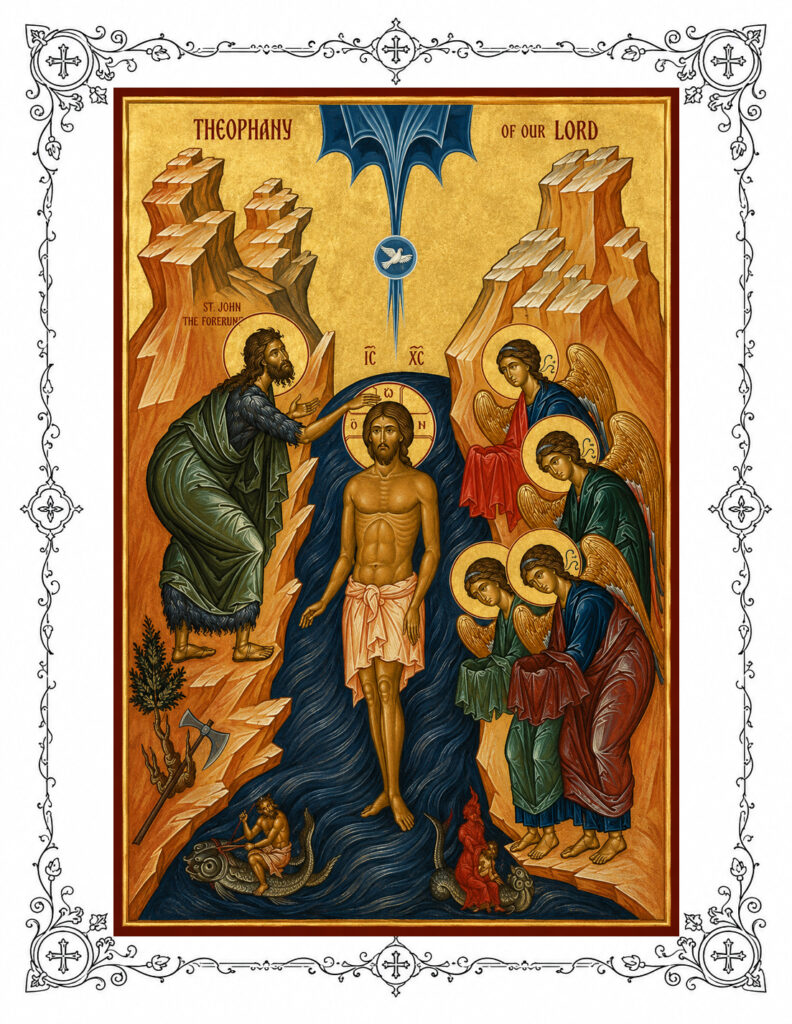
The Flood itself, as the Fathers consistently taught, prefigures baptism, and Noah’s ark prefigures the Church. Lamech, dying before the Flood, belongs to the old world that would pass away, yet his faith in naming his son pointed beyond himself to the renewal of creation.
Liturgical and Spiritual Reflection
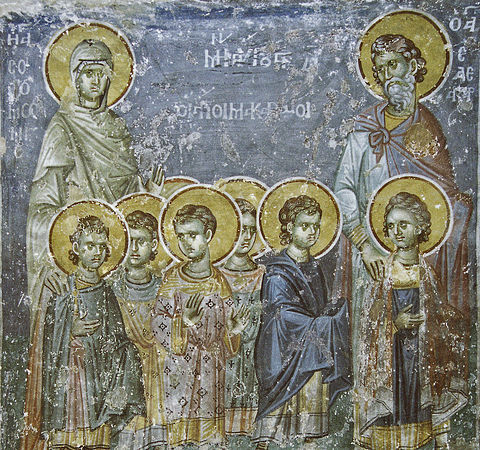
Lamech appears among the righteous ancestors commemorated on the Sunday of the Holy Forefathers, celebrated two Sundays before the Nativity of Christ. In this liturgical context, his life and the lives of all the pre-flood patriarchs are understood as part of the long preparation for the Incarnation. Each generation maintained the promise, each righteous one added his witness to the coming Redeemer.
The repeated refrain “and he died” throughout Genesis 5 serves as a sobering reminder of mortality’s reign from Adam until Christ. Yet within this shadow of death, the faithful lived in hope, and their years, however long, pointed toward the One who would trample down death by death.