Commentary on Genesis 6:12
The Corruption of All Flesh
This verse reveals the totality of creation’s fall into corruption, extending beyond humanity to encompass “all flesh” upon the earth. The Hebrew term kol-basar indicates not merely human sinfulness but a cosmic distortion affecting the entire created order. The Orthodox understanding sees here a profound theological truth: sin is never merely individual but possesses a communal and even cosmic dimension that corrupts the very fabric of existence.
Patristic Interpretation: Saint John Chrysostom, in his Homilies on Genesis, emphasizes that God’s seeing of the earth’s corruption demonstrates His patient long-suffering. The Lord did not act hastily but observed with divine forbearance, giving opportunity for repentance. Chrysostom notes that the corruption of “way” (derek) signifies the abandonment of the natural law written upon human hearts, a theme later developed by Saint Paul in Romans 1-2.
Saint Ephrem the Syrian interprets this universal corruption as the mingling of the righteous line of Seth with the descendants of Cain, resulting in the loss of distinction between holy and profane. This patristic reading emphasizes that holiness requires separation and that compromise with wickedness leads to total corruption.
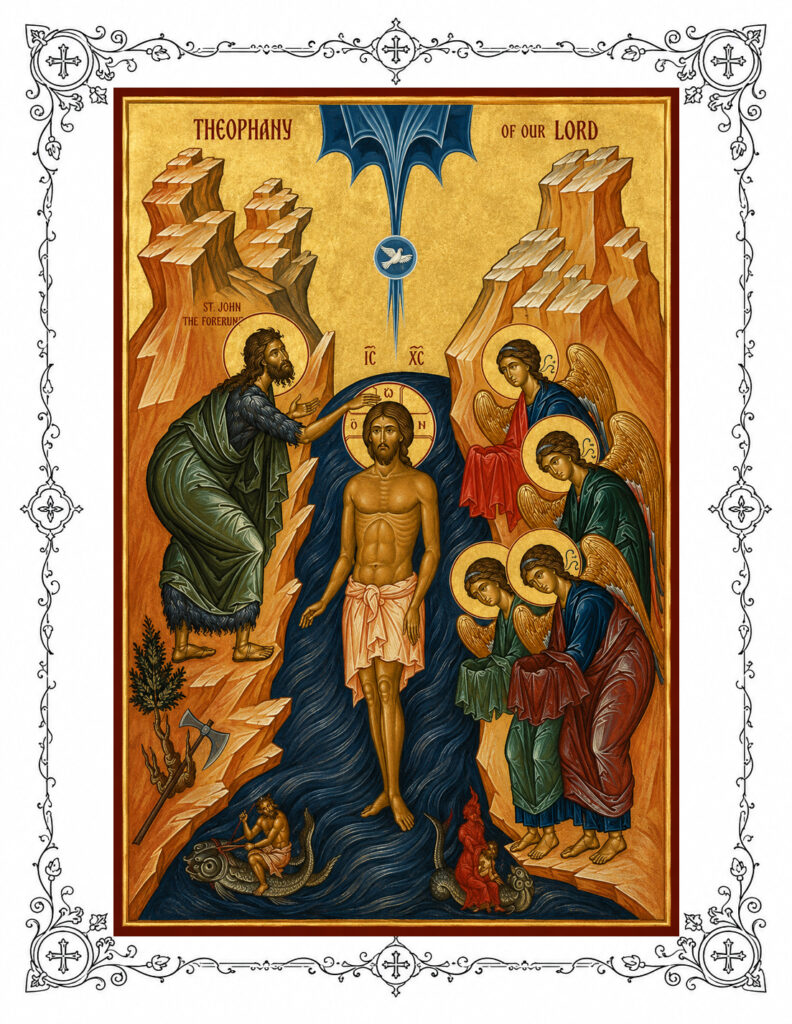
Christological and Soteriological Significance: The universal corruption described here establishes the necessity of divine intervention for salvation. As all flesh had corrupted its way, no merely human remedy could suffice. The Fathers saw in the flood narrative a type of baptism, as Saint Peter explicitly teaches (1 Peter 3:20-21). Christ enters into corrupted flesh to heal it from within, becoming the New Adam who restores what the old humanity had destroyed.
The phrase “before God” (lifnei Elohim) indicates that this corruption was not hidden but openly manifest before the divine presence. This anticipates the Orthodox understanding that sin is ultimately an offense against God’s holiness and love, not merely a violation of abstract law.
Liturgical Connections: The Lenten Triodion draws upon flood imagery to call the faithful to repentance, recognizing that without divine grace, humanity remains in the state of universal corruption. The baptismal prayers speak of water as both instrument of judgment upon sin and means of regeneration, themes rooted in this Genesis narrative.
Spiritual Application: For Orthodox spirituality, this verse serves as a sobering reminder that sin left unchecked spreads and intensifies. The corruption of one generation affects the next, and personal sin contributes to communal degradation. Yet within this darkness, Noah found grace—demonstrating that even amid universal apostasy, God preserves a faithful remnant through whom salvation comes to the world.