The Covenant with Noah as Type of Baptism and the Church
Genesis 6:18 marks the first occurrence of the word “covenant” (Hebrew: berit) in Scripture, establishing a foundational pattern that reaches its fulfillment in Christ. God’s establishment of covenant with Noah before the flood waters came prefigures the new and eternal covenant sealed in the blood of Christ, into which believers enter through the waters of baptism.
Typological Significance for Baptism
The Apostle Peter explicitly connects Noah’s ark and the flood waters to Christian baptism: “baptism, which corresponds to this, now saves you” (1 Peter 3:20-21). The covenant promise given to Noah before entering the ark finds its antitype in the baptismal covenant, wherein the catechumen enters into saving relationship with God through water. Saint Cyril of Jerusalem, in his Catechetical Lectures, draws upon this Noahic imagery when instructing those preparing for baptism, emphasizing that just as Noah was preserved through water unto new life, so the baptized pass through water into resurrection life.
The Ark as Type of the Church
The Fathers consistently interpret the ark as a type of the Church. Saint John Chrysostom teaches that just as salvation was found only within the ark, so salvation is found within the one Church of Christ. The covenant established with Noah and his household prefigures the ecclesial nature of salvation—God saves not merely individuals but a family, a community, those gathered into the ark of the Church.
Liturgical Connections
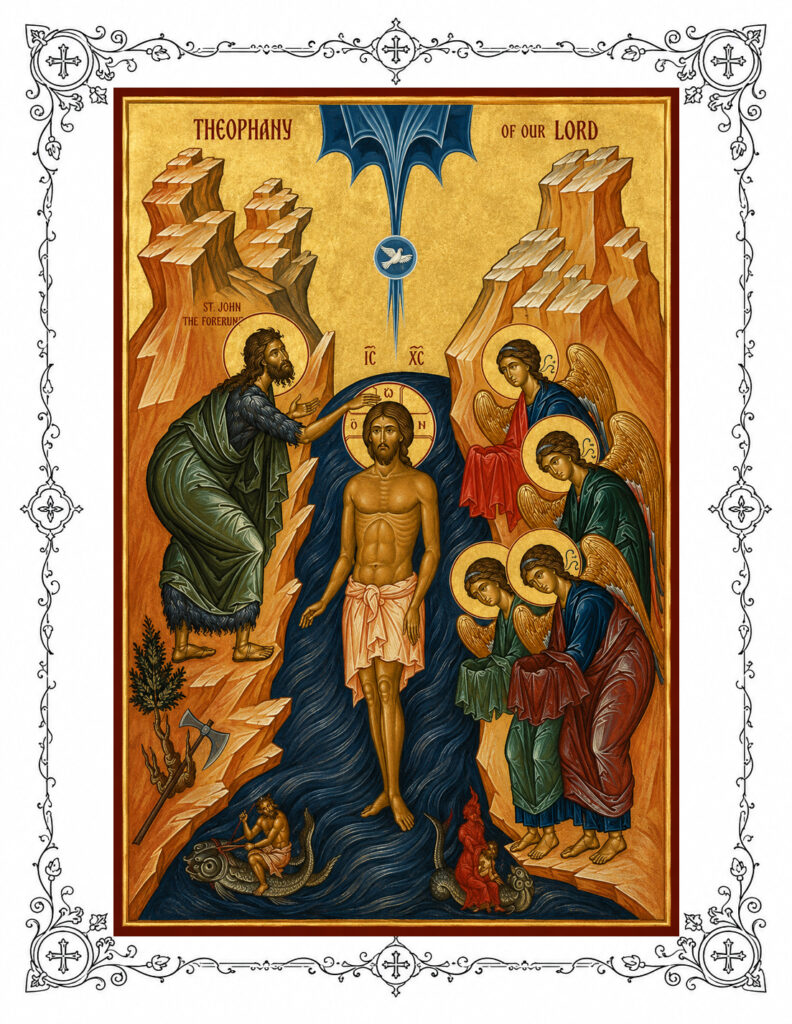
The blessing of waters at Theophany recalls the cosmic significance of water in salvation history, beginning with creation, continuing through the flood, and culminating in Christ’s baptism in the Jordan. The prayers of the Great Blessing of Waters mention Noah and the ark, situating the faithful within this continuous narrative of God’s saving work through water.
In the Orthodox funeral service, we pray that the departed may be delivered “as Noah from the flood,” invoking this ancient covenant promise as assurance of God’s faithfulness beyond death. The covenant with Noah thus becomes a lens through which the Church views both entry into the Christian life and departure from this world.
Christ as the True Ark
Orthodox hymnography celebrates Christ Himself as the ark of salvation. The Theotokos is also hymned as the “spiritual ark” who bore within herself the Savior of the world. The covenant promise to Noah finds its ultimate meaning in the incarnate Word, who establishes the new and everlasting covenant, gathering into Himself all who would be saved from the flood of sin and death.