EOB: Official Site of the Eastern / Greek Orthodox Bible (Old and New Testament)

Genesis 6:5

EOB (Eastern / Greek Orthodox Bible):

The Lord saw that people were very bad, and that all their thoughts were only evil all the time.

EOB Footnote:

(b) MT adds “all day long” (literally “all the day”) to describe the continuous nature of the evil thoughts, which is not present in the LXX. MT also reads “every inclination of the thoughts of his heart” where LXX has “everyone thinks intently in his heart” — the MT emphasizes the faculty of imagination or inclination (Hebrew yetser) rather than the act of thinking. MT specifies “only evil” where LXX has “upon evil things,” making the exclusivity of the evil more emphatic in MT.

Other Translations:

KJV (King James Version):

And GOD saw that the wickedness of man was great in the earth, and that every imagination of the thoughts of his heart was only evil continually.

WEB (World English Bible):

The LORD saw that the wickedness of man was great in the earth, and that every imagination of the thoughts of his heart was only evil continually.

Benton LXX (Vaticanus):

And the Lord God, having seen that the wicked actions of men were multiplied upon the earth, and that every one in his heart was intently brooding over evil continually.

Douai-Rheims (Vulgate):

And God seeing that the wickedness of men was great on the earth, and that all the thought of their heart was bent upon evil at all times.

Apostoliki Diakonia (LXX):

The LORD saw that the wickedness of humanity was great on the earth, and that every inclination of the thoughts of their hearts was only evil continually.

YLT (Young Literal Translation )(MT):

And Jehovah saw that the wickedness of man was great in the earth, and every imagination of the thoughts of his heart was only evil continually.

BBE (Bible in Basic English):

And the Lord saw that the sin of man was great on the earth, and that all the thoughts of his heart were evil.

EOB COMMENTARY:

EOB Commentary:

Genesis 6:5

The Divine Grief and Human Corruption

This verse stands as one of the most sobering assessments of human nature in all of Scripture. The sacred text reveals that human wickedness had become so pervasive that every inclination of the thoughts of the heart was only evil continually. The Hebrew phrase “kol yetser machshevot libbo” emphasizes the totality of this corruption—not merely actions, but the very formation of thought itself had become oriented toward evil.

Patristic Interpretation: Saint John Chrysostom, in his Homilies on Genesis, reflects deeply on this passage, noting that God speaks here in human terms to convey the depth of His response to sin. Chrysostom emphasizes that the corruption was not partial but complete, affecting the innermost deliberations of humanity. Saint Ephrem the Syrian similarly observes that this verse demonstrates how sin, once admitted into the human heart, multiplies and eventually dominates the entire person.

Christological Significance: The Orthodox tradition reads this passage as establishing the necessity of the Incarnation. If human nature had become so thoroughly corrupted that even the thoughts of the heart were continually evil, then salvation could not come through mere moral instruction or prophetic exhortation. The New Adam, Christ Himself, would need to assume human nature and heal it from within. Saint Athanasius in “On the Incarnation” argues that humanity had fallen into such corruption that only the Word of God becoming flesh could restore the divine image.

Liturgical and Spiritual Connections: This verse resonates throughout Orthodox liturgical life, particularly in the penitential prayers. The Prayer of Saint Ephrem, prayed throughout Great Lent, petitions God to grant a spirit that sees one’s own sins—an acknowledgment that without divine grace, we remain blind to our corruption. The Jesus Prayer itself (“Lord Jesus Christ, Son of God, have mercy on me, a sinner”) presupposes this anthropology of radical fallenness.

The verse also illuminates the Orthodox understanding of the nous (the spiritual intellect or heart). When the Fathers speak of the purification of the nous, they address precisely this condition described in Genesis—the corruption of human thought at its deepest level. Hesychastic spirituality, with its emphasis on guarding the heart and bringing every thought captive to Christ, responds directly to the reality that human thoughts, apart from grace, tend toward evil.

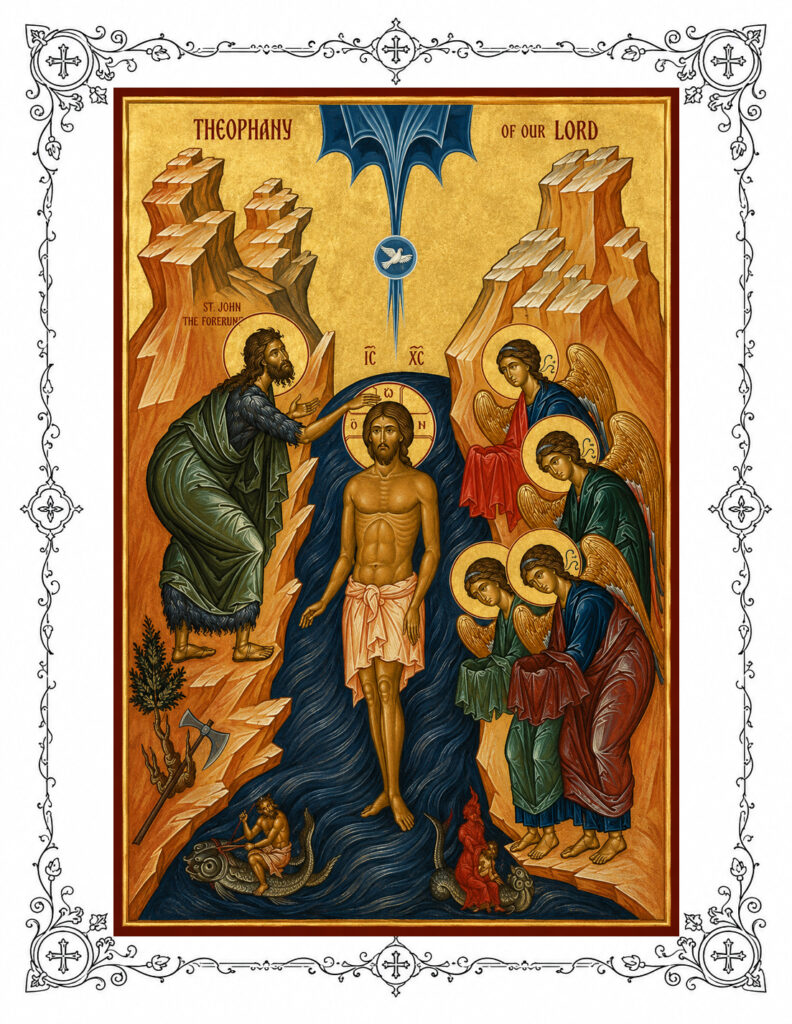
Connection to Baptism: Orthodox theology sees the Flood as a type of Baptism, as Saint Peter explicitly states (1 Peter 3:20-21). The waters that destroyed the corrupt world prefigure the baptismal waters that drown the old man and give birth to new creation in Christ—the reversal of the condition described in this verse.

Introduction to the book of Leviticus

The Book of Leviticus receives its English title from the Latin Vulgate, which is derived from the Greek Septuagint (LXX) title Leuitikon (Λευιτικόν), meaning “Levitical” or “pertaining to the Levites.”

Read More »

Introduction to the book of Exodus

The Book of Exodus receives its English title from the Greek Septuagint (LXX), where it is called Exodos (Ἔξοδος), meaning “departure” or “exit.” This name was chosen because the central

Read More »