Introduction to the book of Leviticus
The Book of Leviticus receives its English title from the Latin Vulgate, which is derived from the Greek Septuagint (LXX) title Leuitikon (Λευιτικόν), meaning “Levitical” or “pertaining to the Levites.”
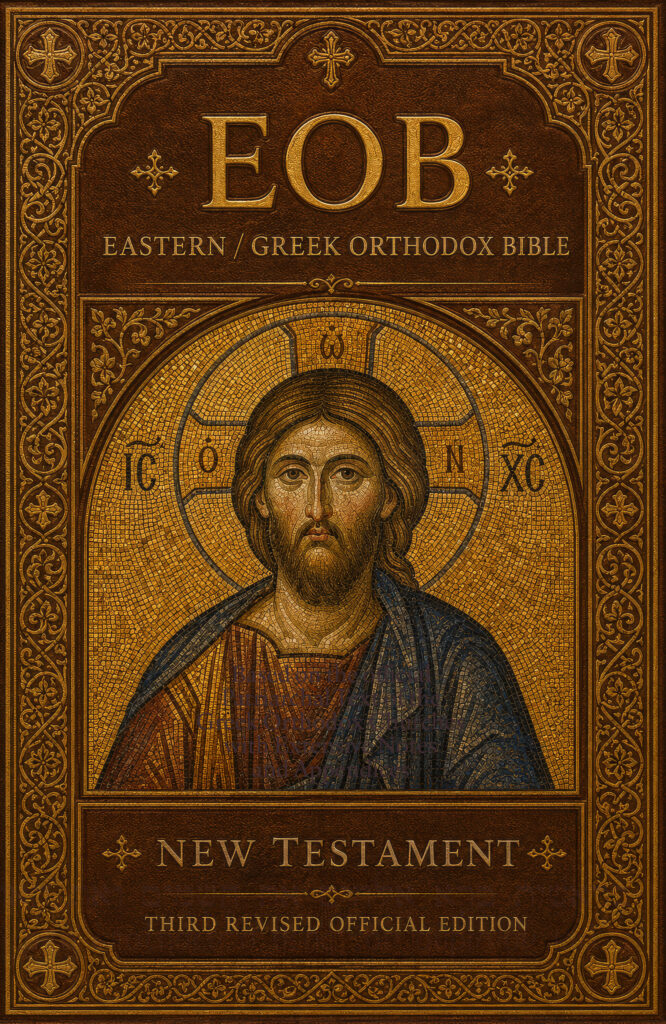
EOB: Official Site of the Eastern / Greek Orthodox Bible (Old and New Testament)
EOB (Eastern / Greek Orthodox Bible):
EOB Footnote:
KJV (King James Version):
WEB (World English Bible):
Benton LXX (Vaticanus):
Douai-Rheims (Vulgate):
Apostoliki Diakonia (LXX):
YLT (Young Literal Translation )(MT):
BBE (Bible in Basic English):
EOB Commentary:
Commentary on Genesis 7:1
The Divine Call to Righteousness
In this verse, the Lord speaks directly to Noah, commanding him to enter the ark with his entire household. The designation of Noah as righteous (tsaddiq) in his generation carries profound theological weight. This is the first instance in Scripture where a human being is explicitly called righteous by God Himself, establishing a pattern that reverberates throughout salvation history.
Typological Significance for Christ and the Church
The Fathers consistently interpreted Noah as a type of Christ, and the ark as a prefiguration of the Church. Saint John Chrysostom emphasizes that just as Noah alone was found righteous and became the instrument of humanity’s preservation, so Christ alone is truly righteous and becomes the means of universal salvation. The command to enter the ark with one’s household anticipates the baptismal theology where entire households are brought into the saving waters of the Church.
Saint Cyprian of Carthage famously declared that outside the ark there was no salvation, drawing the parallel that outside the Church there is no salvation. The ark floating upon the waters of judgment while preserving those within becomes a powerful image of baptism, where believers pass through water into new life.
Liturgical Connections
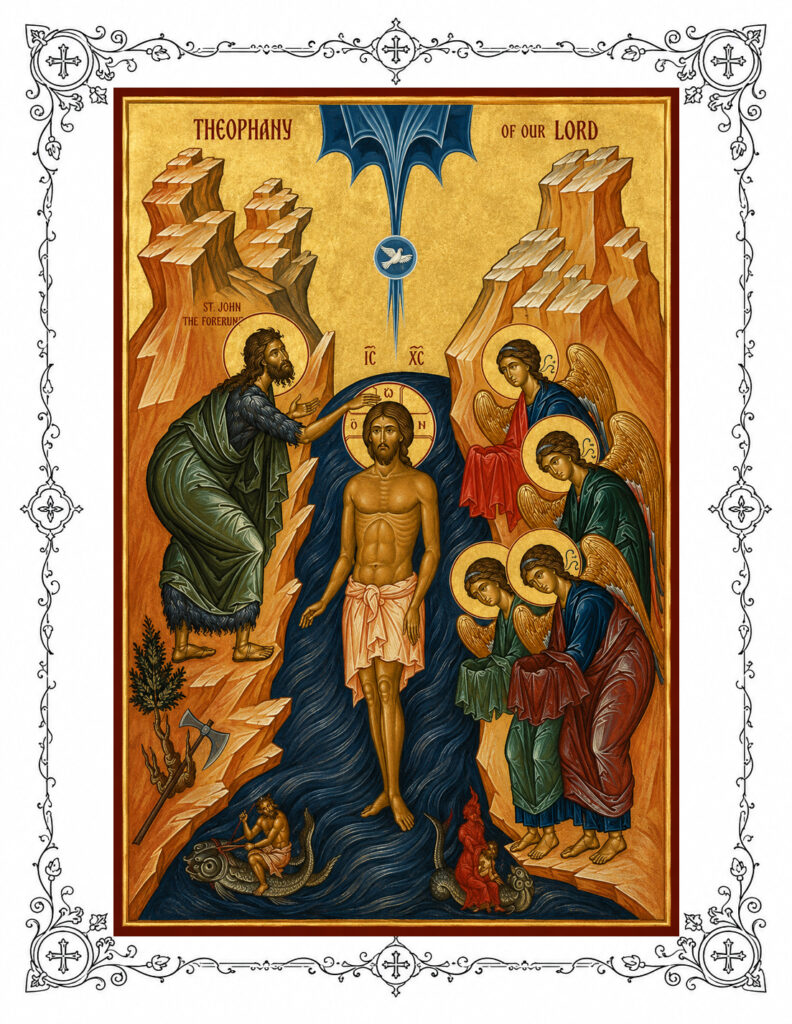
The Orthodox Church reads this passage during the Vesperal Liturgy of Holy Saturday, when catechumens historically received baptism. The connection between Noah’s deliverance through water and Christian baptism is made explicit in the Apostle Peter’s first epistle, where he states that baptism corresponds to the flood as an antitype. The blessing of waters at Theophany also recalls this primordial salvation through water.
In the hymnography of Great Lent, Noah appears as an example of righteousness preserved through divine providence. The Triodion draws upon his faithfulness as a model for the fasting Christian who seeks to be found righteous before God.
Spiritual Application
The phrase “in this generation” suggests that righteousness is always lived within a particular context. Noah’s righteousness was not abstract but demonstrated amid widespread corruption. The Orthodox spiritual tradition emphasizes that holiness is achieved not by escaping the world but by maintaining faithfulness within it. Saint Isaac the Syrian teaches that the righteous person becomes an ark of salvation for others, carrying within themselves the seeds of renewal for a fallen world.
The invitation to enter the ark also prefigures the Eucharistic call to communion. Just as Noah was invited into the place of safety and life, so believers are called to enter into the mystery of Christ’s Body, finding refuge from spiritual death in the sacramental life of the Church.
The Book of Leviticus receives its English title from the Latin Vulgate, which is derived from the Greek Septuagint (LXX) title Leuitikon (Λευιτικόν), meaning “Levitical” or “pertaining to the Levites.”

The Book of Exodus receives its English title from the Greek Septuagint (LXX), where it is called Exodos (Ἔξοδος), meaning “departure” or “exit.” This name was chosen because the central

I. Date and Authorship Holy Tradition of the Orthodox Church, affirmed by the Fathers and the liturgical usage of the Church from the earliest centuries, attributes the Book of Genesis

Does Hebrews 11 on the Maccabees Show Stronger Alignment with 4 Maccabees than 2 Maccabees? Hebrews 11 (the famous “Hall of Faith” chapter) does not explicitly mention the Maccabees by