Introduction to the book of Leviticus
The Book of Leviticus receives its English title from the Latin Vulgate, which is derived from the Greek Septuagint (LXX) title Leuitikon (Λευιτικόν), meaning “Levitical” or “pertaining to the Levites.”
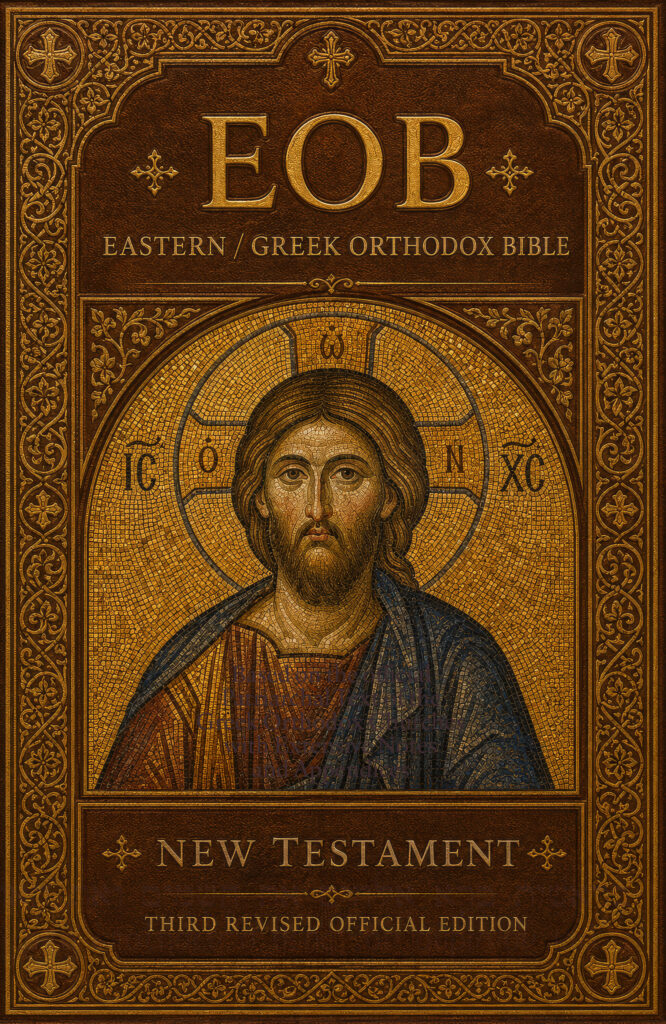
EOB: Official Site of the Eastern / Greek Orthodox Bible (Old and New Testament)
EOB (Eastern / Greek Orthodox Bible):
EOB Footnote:
KJV (King James Version):
WEB (World English Bible):
Benton LXX (Vaticanus):
Douai-Rheims (Vulgate):
Apostoliki Diakonia (LXX):
YLT (Young Literal Translation )(MT):
BBE (Bible in Basic English):
EOB Commentary:
Genesis 7:19 Commentary
The Universal Flood and Its Typological Significance
This verse describes the waters prevailing exceedingly upon the earth, covering all the high hills under the whole heaven. The emphasis on universality—”all the high hills under the whole heaven”—has profound theological implications that extend far beyond a mere historical account of catastrophe.
Patristic Interpretation: The Church Fathers consistently understood the Flood as a type of baptism. Saint Peter himself establishes this connection explicitly in his first epistle, where he speaks of the eight souls saved through water as a figure of baptism that now saves us (1 Peter 3:20-21). The complete covering of the earth by water prefigures the complete immersion of the baptismal candidate, signifying total death to the old life and complete regeneration in Christ.
Saint John Chrysostom reflects on the totality of the Flood’s destruction as demonstrating both divine justice and mercy working together. The waters that destroyed the wicked simultaneously bore up the ark of salvation. Similarly, the waters of baptism destroy the old man of sin while raising up the new creation in Christ.
Christological Dimensions: The mountains covered by water represent the pride of fallen humanity brought low before God. Christ Himself, in His incarnation, descended below all things that He might fill all things. The Flood waters covering the highest peaks typologically anticipate how Christ’s salvific work extends to the uttermost depths and heights of creation—nothing escapes His redemptive reach.
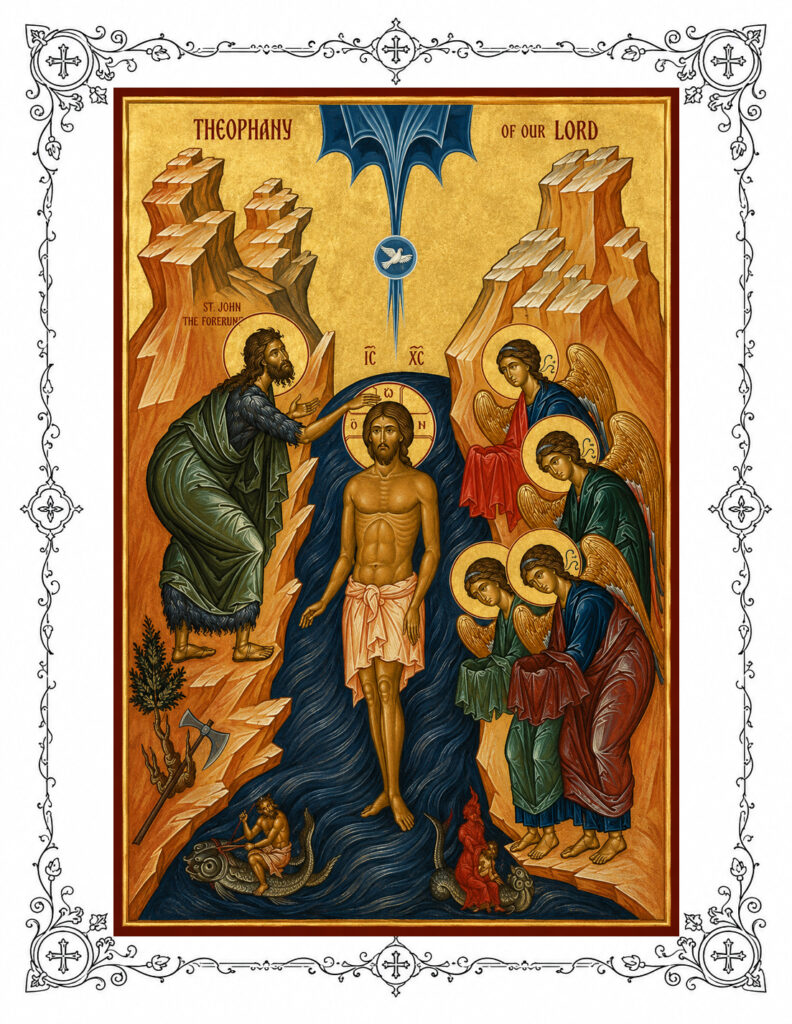
Liturgical Connections: The blessing of waters at Theophany recalls this primordial event. The prayers speak of water as both instrument of judgment and means of sanctification. The Great Blessing of Waters proclaims that Christ sanctified the streams of Jordan and thereby all creation’s waters, transforming what once destroyed into what now gives life.
Orthodox Spiritual Teaching: The Fathers also read this verse ascetically. The soul that would be saved must allow the grace of God to cover over completely all the “high places” of pride and self-will. No mountain of ego can remain above the waters of repentance and divine grace. Complete submission to God’s purifying action—symbolized by total submersion—is necessary for salvation.
Saint Ephrem the Syrian beautifully notes that the ark floated higher as the waters rose, teaching us that tribulations and the apparent triumph of destruction actually elevate the faithful closer to heaven. What seems like overwhelming catastrophe becomes the very means of ascent for those sheltered in the ark of the Church.
The Book of Leviticus receives its English title from the Latin Vulgate, which is derived from the Greek Septuagint (LXX) title Leuitikon (Λευιτικόν), meaning “Levitical” or “pertaining to the Levites.”

The Book of Exodus receives its English title from the Greek Septuagint (LXX), where it is called Exodos (Ἔξοδος), meaning “departure” or “exit.” This name was chosen because the central

I. Date and Authorship Holy Tradition of the Orthodox Church, affirmed by the Fathers and the liturgical usage of the Church from the earliest centuries, attributes the Book of Genesis

Does Hebrews 11 on the Maccabees Show Stronger Alignment with 4 Maccabees than 2 Maccabees? Hebrews 11 (the famous “Hall of Faith” chapter) does not explicitly mention the Maccabees by