EOB: Official Site of the Eastern / Greek Orthodox Bible (Old and New Testament)

Genesis 7:5

EOB (Eastern / Greek Orthodox Bible):

Noah did everything the Lord told him to do.

EOB Footnote:

The MT includes “just as the LORD commanded him” at the end of the verse, whereas the LXX reads “just as the Lord God commanded him.” The LXX adds “God” (rendering the divine name with both terms), while the MT has only the Tetragrammaton. No DSS manuscript preserves this verse.

Other Translations:

KJV (King James Version):

And Noah did according unto all that the LORD commanded him.

WEB (World English Bible):

Noah did everything that Yahweh commanded him.

Benton LXX (Vaticanus):

And Noe did all things whatever the Lord God commanded him.

Douai-Rheims (Vulgate):

And he did all things which the Lord had commanded him.

Apostoliki Diakonia (LXX):

And Noah did all that the Lord God commanded him.

YLT (Young Literal Translation )(MT):

And Noah did according to all that Jehovah commanded him.

BBE (Bible in Basic English):

And Noah did everything which the Lord said he was to do.

EOB COMMENTARY:

EOB Commentary:

Commentary on Genesis 7:5

Noah’s Obedience as Typology of Christ

This brief verse, stating that Noah did all that the Lord commanded him, carries profound theological weight in the Orthodox tradition. Noah’s perfect obedience stands as a typological foreshadowing of Christ, the New Adam, whose obedience unto death reversed the disobedience of the first Adam. Saint Paul draws this parallel explicitly when he writes that “by one man’s obedience many will be made righteous” (Romans 5:19). Noah, in his complete submission to the divine will, prefigures the One who would say in Gethsemane, “Not my will, but Thine be done.”

Patristic Interpretation

Saint John Chrysostom emphasizes that Noah’s obedience was not partial but complete—he did “all” that was commanded. Chrysostom notes that this totality of obedience, maintained over the long years of building the ark amid the mockery of his contemporaries, demonstrates the nature of true faith. Saint Ephrem the Syrian similarly observes that Noah’s faithful action, performed without having seen the flood, exemplifies the faith that believes without seeing, which Christ later blessed in the Gospel of John.

Liturgical and Baptismal Connections

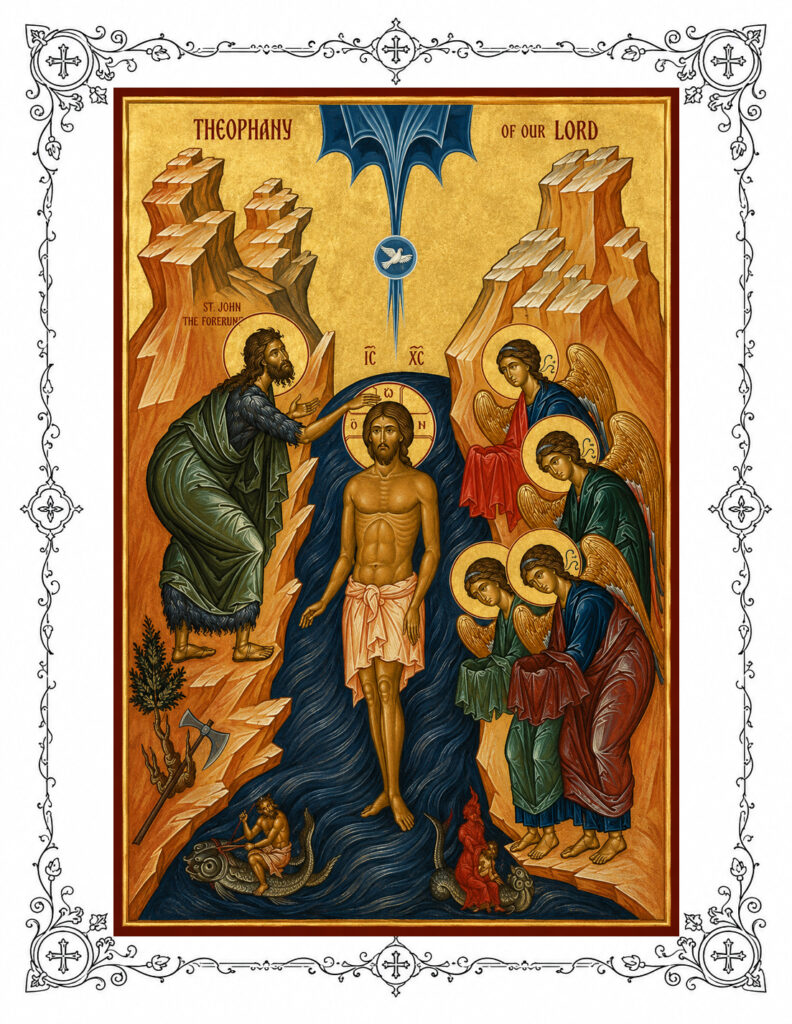
The Orthodox Church reads the account of Noah and the flood during the Vesperal Liturgy of Theophany, connecting the waters of the flood with the waters of baptism. Noah’s obedience that led to salvation through water becomes a type of the Christian’s obedience to Christ in baptism. As Saint Peter writes, baptism “now saves you” as a fulfillment of what the ark prefigured (1 Peter 3:20-21). The faithful Christian, like Noah, must do “all” that the Lord commands to enter the ark of salvation, which the Fathers identify as the Church.

Spiritual Application

For Orthodox spirituality, this verse presents the model of synergy—the cooperation between divine grace and human will. God provides the plan and the means of salvation; Noah provides willing obedience. This pattern repeats throughout salvation history and finds its fulfillment in the Theotokos, whose “let it be to me according to your word” echoes Noah’s silent compliance. The ascetic tradition of the Church calls every believer to this same wholehearted obedience, not selective adherence to comfortable commandments, but complete surrender to the divine will. As the Optina Elders taught, the spiritual life consists precisely in learning to do all that the Lord commands, trusting that His commands lead not to destruction but to the preservation of life through the waters of judgment.

Introduction to the book of Leviticus

The Book of Leviticus receives its English title from the Latin Vulgate, which is derived from the Greek Septuagint (LXX) title Leuitikon (Λευιτικόν), meaning “Levitical” or “pertaining to the Levites.”

Read More »

Introduction to the book of Exodus

The Book of Exodus receives its English title from the Greek Septuagint (LXX), where it is called Exodos (Ἔξοδος), meaning “departure” or “exit.” This name was chosen because the central

Read More »