Commentary on Genesis 7:7
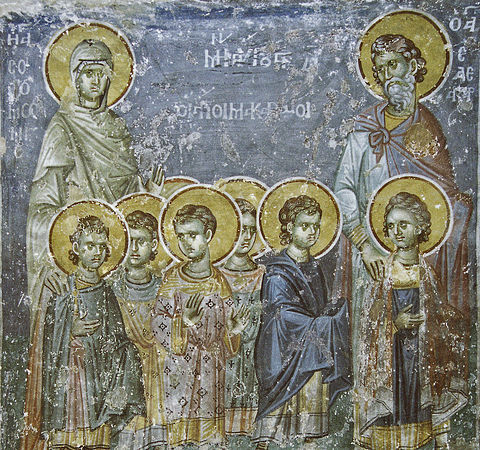
Noah and his family entering the ark stands as one of the most typologically rich images in all of Scripture, finding its fulfillment in the mystery of salvation through Christ and His Church.
Typological Significance for the New Testament
The Apostle Peter explicitly connects this passage to Christian baptism, declaring that the waters of the flood prefigured the waters through which believers are now saved (1 Peter 3:20-21). Just as Noah and his household were preserved through water by entering the ark, so too are Christians saved through the waters of baptism by entering into Christ. The ark itself becomes a type of the Church, the vessel of salvation in which the faithful find refuge from the judgment that comes upon the world.
Christological Reading
The Fathers understood Noah as a type of Christ, the righteous one who leads his household into salvation. Yet more profoundly, the ark itself prefigures Christ, for it is only by entering into Him that humanity escapes destruction. Saint Ambrose of Milan taught that as Noah gathered his family into the wooden ark, so Christ gathers the faithful into Himself through the wood of the Cross. The dimensions and construction of the ark were seen by many Fathers, including Saint Augustine, as containing mystical references to the body of Christ and the structure of the Church.
Patristic Witness
Saint John Chrysostom emphasized the obedience of Noah in this verse, noting that he entered the ark precisely as God commanded, neither questioning nor delaying. This immediate response to divine command serves as a model for all believers. Chrysostom also observed that the entire household entered together, prefiguring the corporate nature of salvation within the Church, where families and communities are sanctified together.
Saint Ephrem the Syrian meditated on how the ark received all who entered, making no distinction, just as the Church receives all nations and peoples who come to Christ in faith.
Liturgical and Spiritual Connections
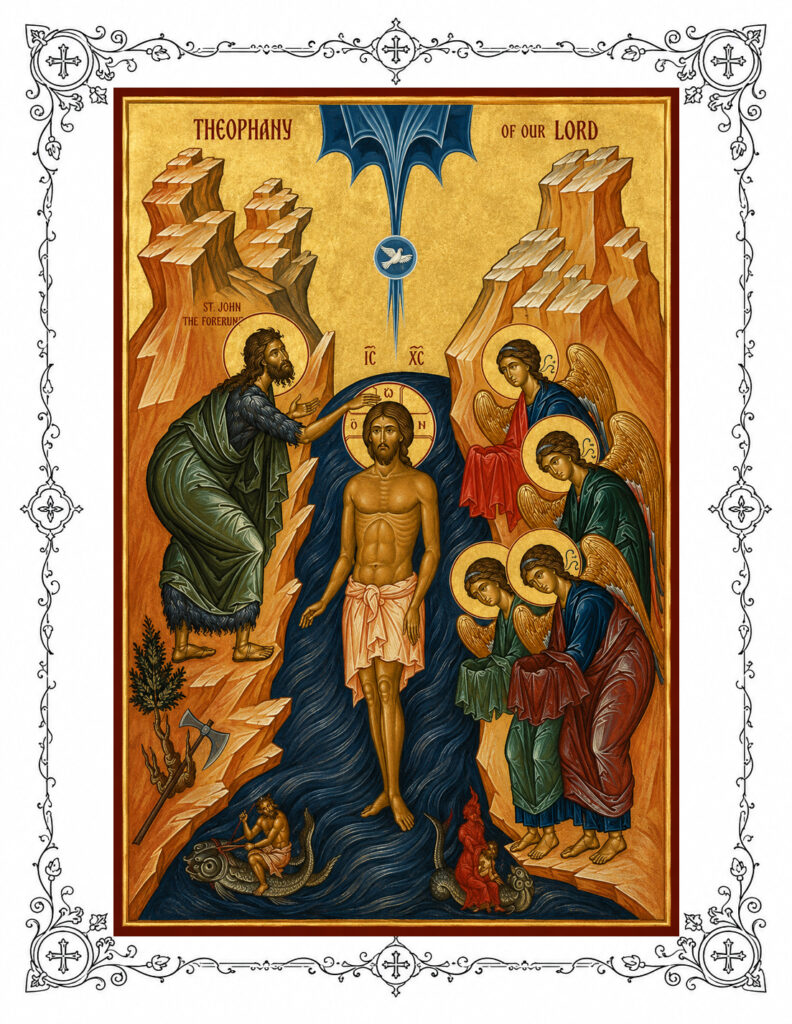
In the Orthodox baptismal service, the blessing of the waters recalls the flood, acknowledging that water serves as both judgment and salvation. The prayer over the waters invokes the memory of Noah, connecting the catechumen’s descent into the font with Noah’s entrance into the ark.
The theme of entering through a narrow door resonates with Christ’s own teaching about the narrow gate that leads to life. The ark had but one door, just as Christ declares Himself to be the one door of the sheep. Orthodox spirituality emphasizes this singular path of salvation, encouraging the faithful to enter fully into the life of the Church, the ark that carries believers safely through the turbulent waters of this present age toward the shores of the Kingdom.