GENESIS 8:1 – “And God remembered Noah”
The Divine Remembrance
The phrase “God remembered Noah” stands as one of the most theologically rich expressions in the flood narrative. This remembrance (Hebrew: zakar) does not imply that God had forgotten Noah, for the Omniscient One cannot forget. Rather, this divine remembrance signifies the active turning of God’s salvific attention toward His faithful servant, marking the transition from judgment to restoration.
St. John Chrysostom teaches that this expression is an accommodation to human understanding, demonstrating God’s tender care for the righteous. The remembrance indicates not a change in God’s knowledge but a change in His action—from the work of purifying judgment to the work of merciful deliverance.
Typological Significance
The Fathers consistently read this verse as prefiguring Christ’s descent into Hades and His remembrance of the faithful departed. Just as God remembered Noah amid the waters of destruction, so Christ remembered the righteous who awaited salvation in the realm of death. The wind (Hebrew: ruach) that God caused to pass over the earth echoes the Spirit hovering over the waters in Genesis 1:2, signifying a new creation emerging from the flood.
The ark itself, preserved through divine remembrance, typifies the Church, which Christ never forgets even amid the storms of persecution and tribulation. St. Cyprian of Carthage famously declared that outside the ark there was no salvation, establishing the ecclesiological reading that would become standard in Orthodox interpretation.
Liturgical Connections
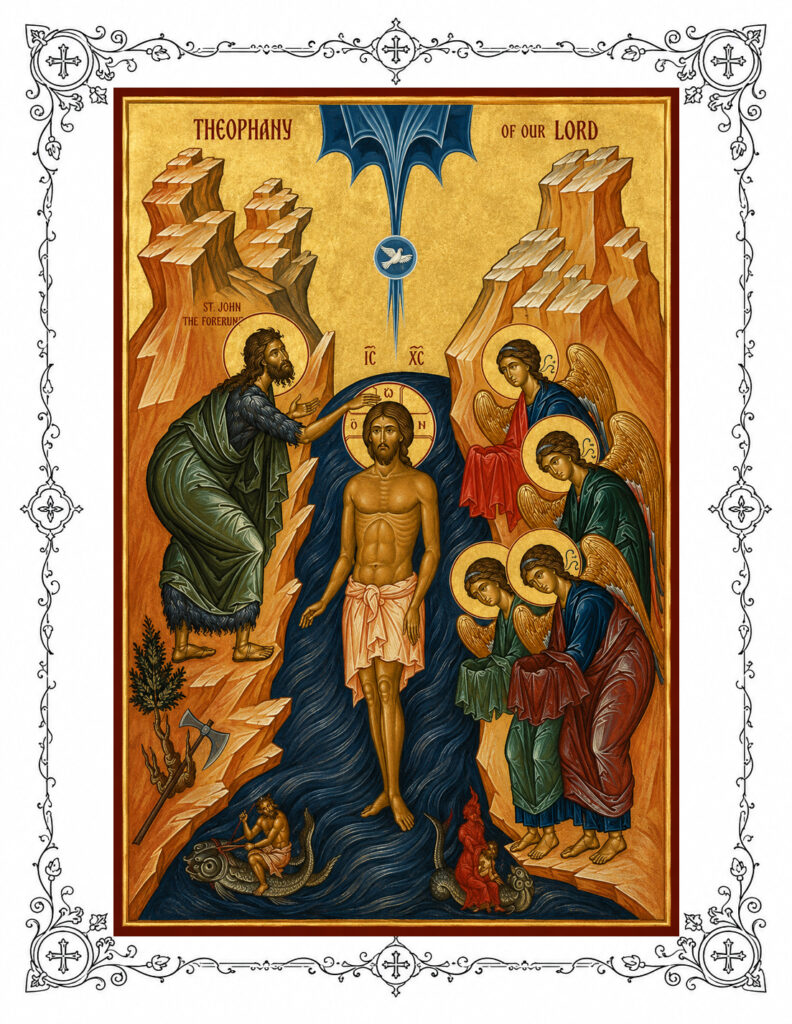
This passage finds resonance in the Great Blessing of Waters at Theophany, where the Church prays over the waters, invoking the Spirit to transform them from instruments of death into sources of life. The Theophany prayers explicitly recall the flood as a type of baptismal regeneration.
The Paschal Vigil readings include the flood narrative, connecting Noah’s deliverance to Christ’s resurrection. As Noah emerged from the ark into a renewed world, so the baptized emerge from the font into newness of life, and so all creation awaits the final renewal at Christ’s return.
Spiritual Application
For the Orthodox spiritual life, this verse offers profound consolation. In times of trial, when believers feel submerged beneath afflictions, the assurance that God remembers His faithful ones provides hope. The hesychastic tradition emphasizes that our remembrance of God in prayer corresponds to His eternal remembrance of us. As we invoke His name, we participate in the mystery of divine-human communion that Noah experienced in the ark.
The verse also teaches patience in tribulation. Noah waited in the ark, trusting in God’s timing. Similarly, the Christian life requires patient endurance, confident that God’s remembrance will manifest in deliverance at the appointed hour.