Commentary on Genesis 8:10
The Patience of Noah and the Spiritual Life
This brief verse, describing Noah’s seven-day wait before sending forth the dove a second time, carries profound spiritual significance that the Church Fathers recognized as instructive for the life of faith. The detail that Noah “waited yet another seven days” reveals the patriarch’s patient endurance and trust in divine providence—virtues essential to Orthodox spirituality.
Typological Significance
The seven-day period recalls the original creation week and anticipates the eschatological rest promised to the faithful. Saint John Chrysostom observes that Noah’s patience amid uncertainty models the disposition required of all who await God’s deliverance. The righteous one does not demand immediate resolution but submits to divine timing, understanding that God’s ways transcend human impatience.
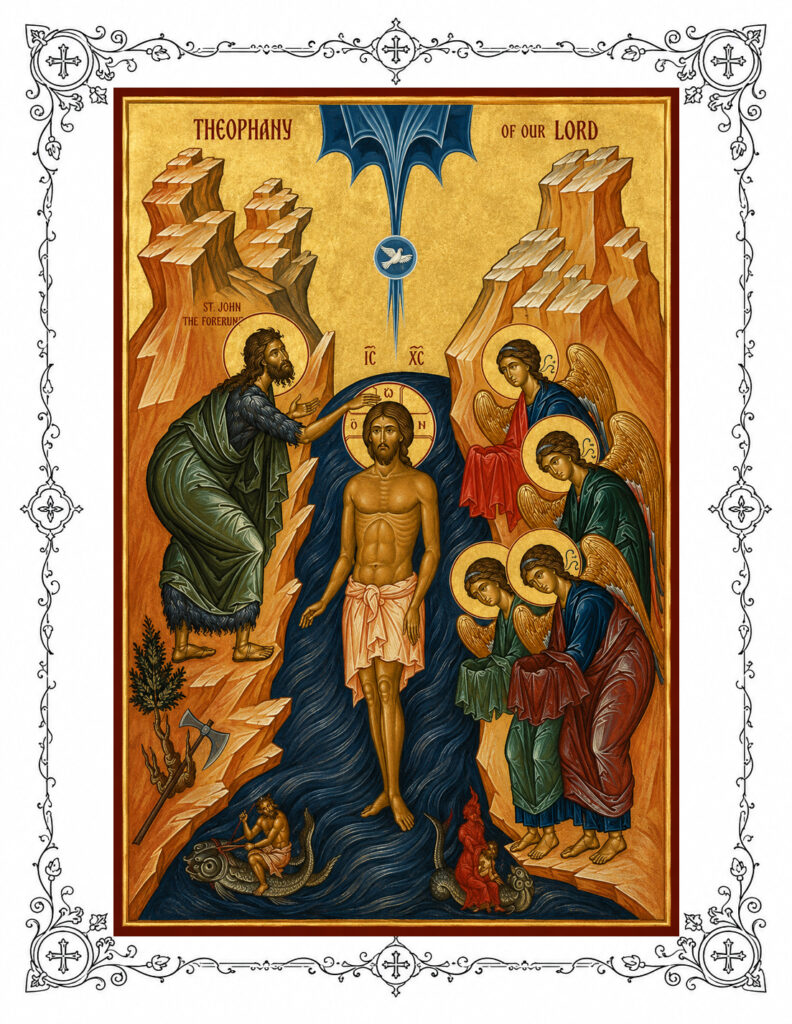
The dove itself, as the Fathers consistently teach, prefigures the Holy Spirit. Just as Noah sent forth the dove to discern whether new life was possible upon the earth, so the Father sends forth the Spirit to prepare creation for renewal. The repeated sending—first without result, then with the olive branch—suggests the progressive nature of divine revelation and salvation, culminating in the descent of the Spirit upon Christ at the Jordan.
Christological and Baptismal Connections
The liturgical tradition of the Orthodox Church draws deeply from this narrative in the blessing of baptismal waters. The prayers of Great Blessing invoke the image of the dove returning to the ark, connecting Noah’s deliverance through water to the Christian’s passage through the baptismal font into new life. The dove bearing the olive branch becomes an icon of peace between God and humanity, restored definitively in Christ.
Saint Cyril of Jerusalem, in his Catechetical Lectures, links the dove of Noah to the dove descending upon Christ, noting that both signal the end of judgment and the beginning of reconciliation. The olive branch, symbol of divine mercy, finds its fulfillment in the anointing with holy chrism that follows baptism—the seal of the gift of the Holy Spirit.
Ascetical Application
For the spiritual life, Noah’s patient waiting instructs believers in the practice of holy expectation. The hesychastic tradition emphasizes this quality of watchful waiting, neither grasping at consolations nor despairing in their absence. As Noah trusted that the waters would recede according to God’s will, so the Christian learns to await the movements of grace with humble attentiveness, neither rushing ahead of providence nor lagging behind in sloth.