Introduction to the book of Leviticus
The Book of Leviticus receives its English title from the Latin Vulgate, which is derived from the Greek Septuagint (LXX) title Leuitikon (Λευιτικόν), meaning “Levitical” or “pertaining to the Levites.”
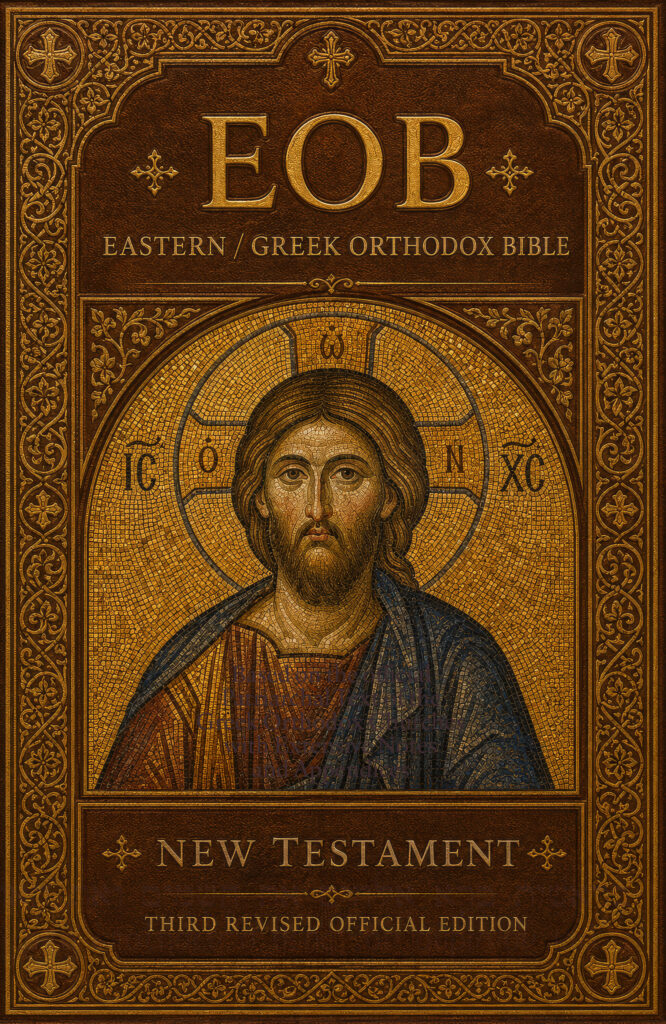
EOB: Official Site of the Eastern / Greek Orthodox Bible (Old and New Testament)
EOB (Eastern / Greek Orthodox Bible):
EOB Footnote:
KJV (King James Version):
WEB (World English Bible):
Benton LXX (Vaticanus):
Douai-Rheims (Vulgate):
Apostoliki Diakonia (LXX):
YLT (Young Literal Translation )(MT):
BBE (Bible in Basic English):
EOB Commentary:
Commentary on Genesis 8:15
The Divine Command to Begin Anew
This verse marks a pivotal moment in the flood narrative where God breaks His silence and speaks directly to Noah for the first time since commanding him to enter the ark. The significance lies not merely in the instruction itself but in the restoration of divine-human dialogue after the cataclysmic judgment. God speaks (elalesen ho Theos) to Noah, initiating a new chapter in salvation history.
Typological Significance for Christ and the Church
The Fathers consistently read Noah’s emergence from the ark as a type of resurrection and new creation. Just as Noah waited for God’s word before departing the ark—despite the dove’s evidence that the earth was dry—so too the Church awaits the voice of her Lord. Saint John Chrysostom emphasizes that Noah did not presume to leave on his own initiative but waited for divine permission, demonstrating the virtue of obedience that stands in contrast to Adam’s disobedience. Noah becomes a second Adam, called forth by God to replenish and exercise dominion over a cleansed earth.
The ark itself, as Saint Cyril of Jerusalem and other Fathers teach, prefigures baptism and the Church. God’s command to exit the ark thus anticipates Christ’s commission to His disciples after the Resurrection. As Noah emerged to a renewed world, so the baptized emerge from the waters to walk in newness of life. The timing is significant—Noah remained in the ark until God spoke, just as Christ remained in the tomb until the appointed hour of resurrection.
Liturgical and Spiritual Dimensions
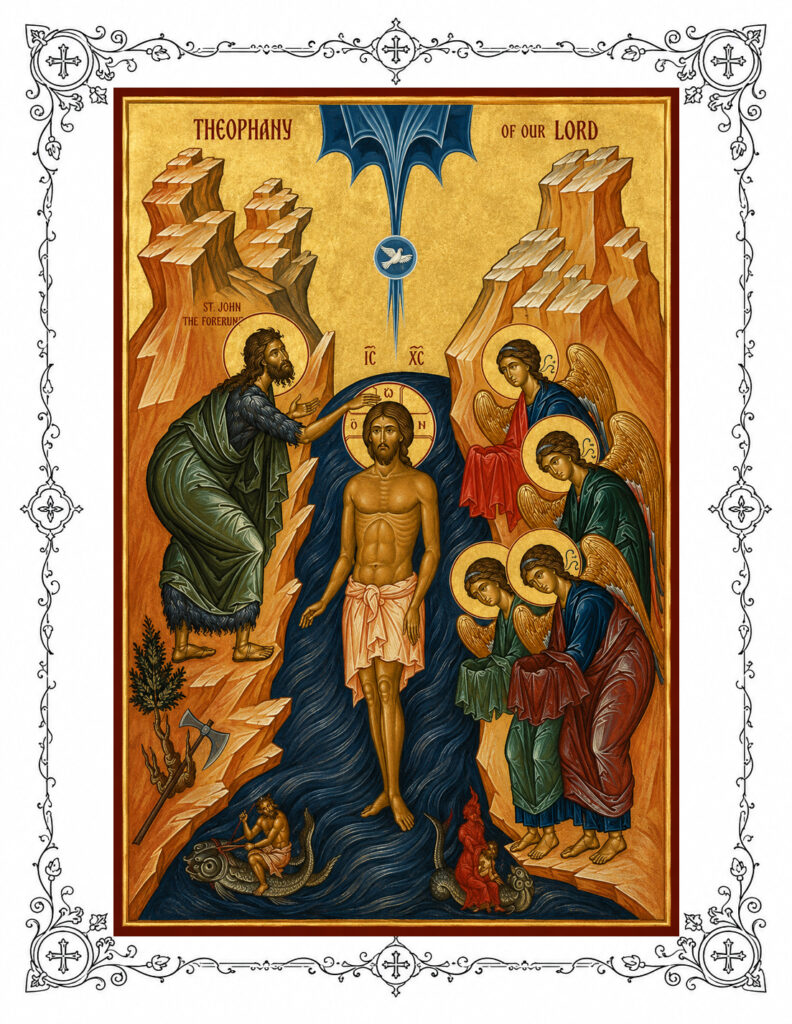
In Orthodox liturgical tradition, the flood narrative features prominently in the readings for Theophany, connecting the waters of the flood with the sanctification of all creation through Christ’s baptism. The Great Blessing of Waters recalls how God purified the world through water and now sanctifies it through the descent of the Holy Spirit.
The spiritual lesson for the faithful is profound: we must not act precipitously according to our own judgment but await the Lord’s direction. Noah possessed evidence that the earth was habitable, yet he remained until commanded. This teaches the Orthodox understanding of synergy—human cooperation with divine will—and the importance of discernment (diakrisis) in the spiritual life. The hesychastic tradition particularly values this attentiveness to God’s voice before action.
The verse also reminds us that salvation is not merely escape from judgment but entrance into renewed communion with God, who speaks to His faithful ones and guides them into the fullness of life He has prepared.
The Book of Leviticus receives its English title from the Latin Vulgate, which is derived from the Greek Septuagint (LXX) title Leuitikon (Λευιτικόν), meaning “Levitical” or “pertaining to the Levites.”

The Book of Exodus receives its English title from the Greek Septuagint (LXX), where it is called Exodos (Ἔξοδος), meaning “departure” or “exit.” This name was chosen because the central

I. Date and Authorship Holy Tradition of the Orthodox Church, affirmed by the Fathers and the liturgical usage of the Church from the earliest centuries, attributes the Book of Genesis

Does Hebrews 11 on the Maccabees Show Stronger Alignment with 4 Maccabees than 2 Maccabees? Hebrews 11 (the famous “Hall of Faith” chapter) does not explicitly mention the Maccabees by