Introduction to the book of Leviticus
The Book of Leviticus receives its English title from the Latin Vulgate, which is derived from the Greek Septuagint (LXX) title Leuitikon (Λευιτικόν), meaning “Levitical” or “pertaining to the Levites.”
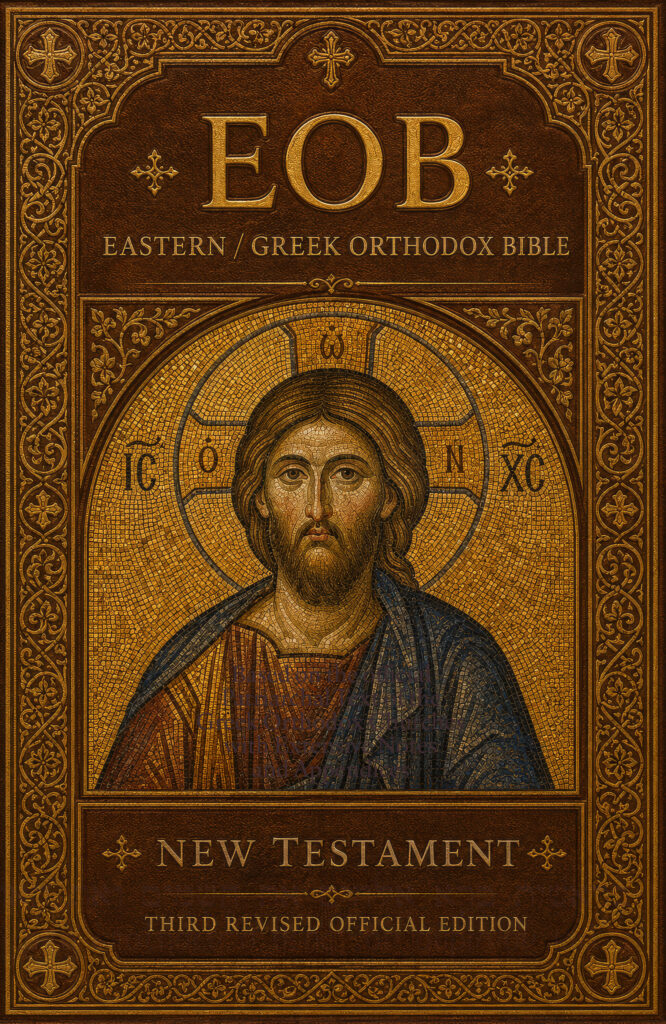
EOB: Official Site of the Eastern / Greek Orthodox Bible (Old and New Testament)
EOB (Eastern / Greek Orthodox Bible):
EOB Footnote:
KJV (King James Version):
WEB (World English Bible):
Benton LXX (Vaticanus):
Douai-Rheims (Vulgate):
Apostoliki Diakonia (LXX):
YLT (Young Literal Translation )(MT):
BBE (Bible in Basic English):
EOB Commentary:
The Fountains of the Deep and the Windows of Heaven Closed
This verse marks a pivotal moment in the flood narrative—the cessation of divine judgment and the beginning of cosmic restoration. The closing of the fountains of the deep (tehom) and the windows of heaven represents God’s sovereign control over the primordial waters of chaos, demonstrating that the Lord who unleashed judgment is also the Lord who restrains it.
Christological and Baptismal Significance
The Fathers consistently read the flood narrative through the lens of baptism, and this verse participates in that typology. Just as the waters of judgment ceased and gave way to new life for Noah and his family, so the baptismal waters become the means of death to the old self and resurrection to new life in Christ. Saint Peter explicitly connects the flood to baptism, noting that “eight souls were saved through water” as a type of the salvation now given through baptismal regeneration (1 Peter 3:20-21).
The restraining of the waters also prefigures Christ’s authority over the chaotic forces of nature and death. When our Lord calmed the storm on the Sea of Galilee, He demonstrated the same divine sovereignty over the deep that the Father exercised in Noah’s day. The disciples’ question—”Who then is this, that even the wind and the sea obey Him?”—finds its answer in this ancient text: He is the same God who closes the fountains of the deep.
Patristic Interpretation
Saint Ephrem the Syrian sees in the closing of the heavenly windows a restoration of the natural order that had been disrupted by human sin. The flood represented a partial return to the pre-creation chaos of Genesis 1:2, and its cessation marks a new creative act parallel to the original separation of waters.
Saint John Chrysostom emphasizes God’s mercy in this verse, noting that the same God who justly punished wickedness also graciously limits that punishment. The closing of the waters demonstrates that divine judgment, while real, is never God’s final word—restoration and renewal follow.
Liturgical Connections
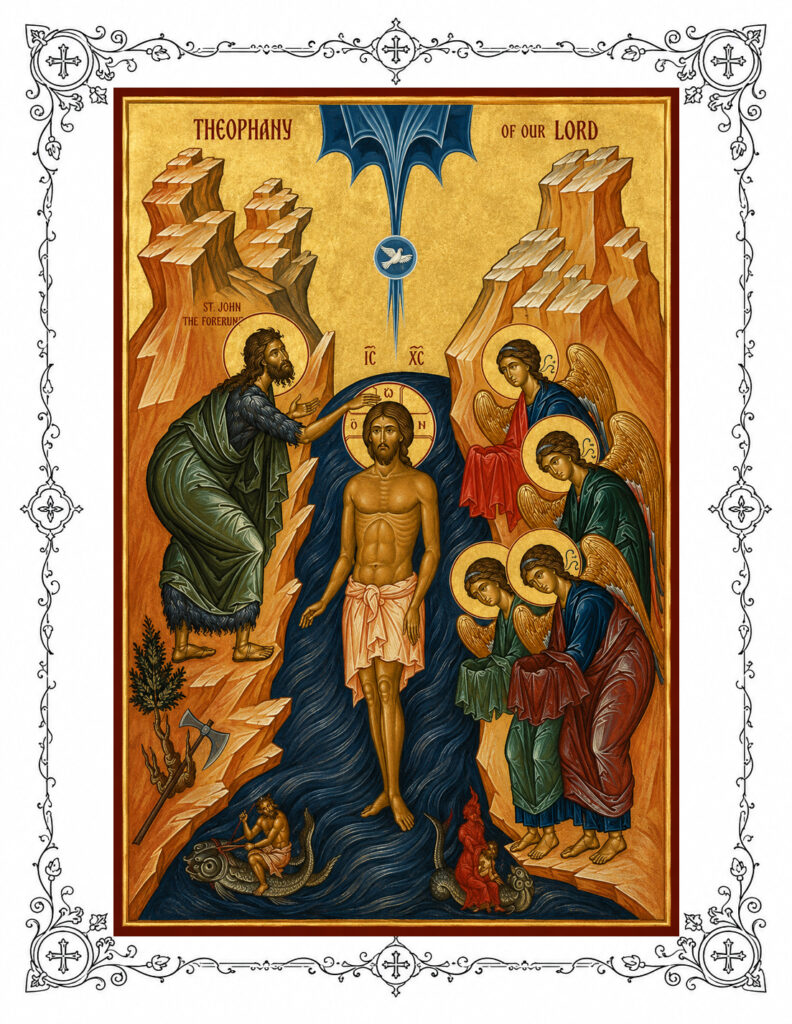
In the Orthodox blessing of waters at Theophany, the Church prays that the Lord who once judged the world through water would now sanctify the waters for healing and blessing. The movement from Genesis 8:2—waters restrained after judgment—to the Jordan—waters sanctified for salvation—traces the arc of redemption. The troparion of Theophany celebrates Christ’s baptism as the moment when He “crushed the heads of the dragons in the waters,” definitively conquering the chaotic forces that the flood waters represented.
The Book of Leviticus receives its English title from the Latin Vulgate, which is derived from the Greek Septuagint (LXX) title Leuitikon (Λευιτικόν), meaning “Levitical” or “pertaining to the Levites.”

The Book of Exodus receives its English title from the Greek Septuagint (LXX), where it is called Exodos (Ἔξοδος), meaning “departure” or “exit.” This name was chosen because the central

I. Date and Authorship Holy Tradition of the Orthodox Church, affirmed by the Fathers and the liturgical usage of the Church from the earliest centuries, attributes the Book of Genesis

Does Hebrews 11 on the Maccabees Show Stronger Alignment with 4 Maccabees than 2 Maccabees? Hebrews 11 (the famous “Hall of Faith” chapter) does not explicitly mention the Maccabees by