Introduction to the book of Leviticus
The Book of Leviticus receives its English title from the Latin Vulgate, which is derived from the Greek Septuagint (LXX) title Leuitikon (Λευιτικόν), meaning “Levitical” or “pertaining to the Levites.”
EOB: Official Site of the Eastern / Greek Orthodox Bible (Old and New Testament)
EOB (Eastern / Greek Orthodox Bible):
EOB Footnote:
KJV (King James Version):
WEB (World English Bible):
Benton LXX (Vaticanus):
Douai-Rheims (Vulgate):
Apostoliki Diakonia (LXX):
YLT (Young Literal Translation )(MT):
BBE (Bible in Basic English):
EOB Commentary:
Commentary on Genesis 8:21
The Divine Response to Noah’s Sacrifice
This verse marks a profound turning point in the relationship between God and humanity following the catastrophic flood. The Lord’s declaration that He will never again curse the ground because of man, despite acknowledging that the imagination of man’s heart is evil from his youth, reveals the depths of divine mercy and establishes a foundation for understanding redemption throughout Scripture.
Christological Significance
The sweet savor (Hebrew: reach nichoach) ascending from Noah’s sacrifice prefigures the ultimate sacrifice of Christ. Saint Paul explicitly connects this imagery to our Lord when he writes that Christ “gave himself for us an offering and a sacrifice to God for a sweetsmelling savour” (Ephesians 5:2). Noah’s altar thus becomes a type of Golgotha, where the true and perfect sacrifice would be offered not merely to restrain divine judgment temporarily, but to abolish the curse of sin eternally. The burnt offerings of clean animals point forward to the Lamb of God who takes away the sin of the world.
Patristic Interpretation
Saint John Chrysostom emphasizes that God’s response demonstrates His philanthropia—His love for mankind—which persists despite human weakness. The acknowledgment that man’s heart inclines toward evil from youth does not provoke further condemnation but rather moves God toward greater patience. Saint Ephrem the Syrian notes that the fragrance pleasing to God was not the smoke of burning flesh but the faith and righteousness of Noah, teaching us that outward sacrifice without inner devotion remains empty.
Saint Cyril of Alexandria sees in this passage a foreshadowing of the new covenant, where God’s promise not to destroy takes its ultimate form in the promise of salvation through Christ.
Liturgical Connections
The Orthodox Church reads this passage during the Vespers of Theophany, connecting the waters of the flood with the sanctification of waters through Christ’s baptism. Just as God established peace with creation after the flood, so through baptism He establishes peace with each soul. The prayer of blessing over the waters recalls how God transformed the instrument of judgment into a sign of mercy.
Spiritual Application
This verse teaches the Orthodox faithful that God’s mercy precedes and exceeds human merit. The Church understands that we approach God not because we have purified our hearts completely, but because He has chosen to receive us despite our fallen condition. This becomes the basis for the Jesus Prayer and all penitential practice—we cry out for mercy knowing that God has already determined to show compassion. The sweet savor acceptable to God today rises from contrite hearts united to Christ’s eternal offering.
The Book of Leviticus receives its English title from the Latin Vulgate, which is derived from the Greek Septuagint (LXX) title Leuitikon (Λευιτικόν), meaning “Levitical” or “pertaining to the Levites.”

The Book of Exodus receives its English title from the Greek Septuagint (LXX), where it is called Exodos (Ἔξοδος), meaning “departure” or “exit.” This name was chosen because the central
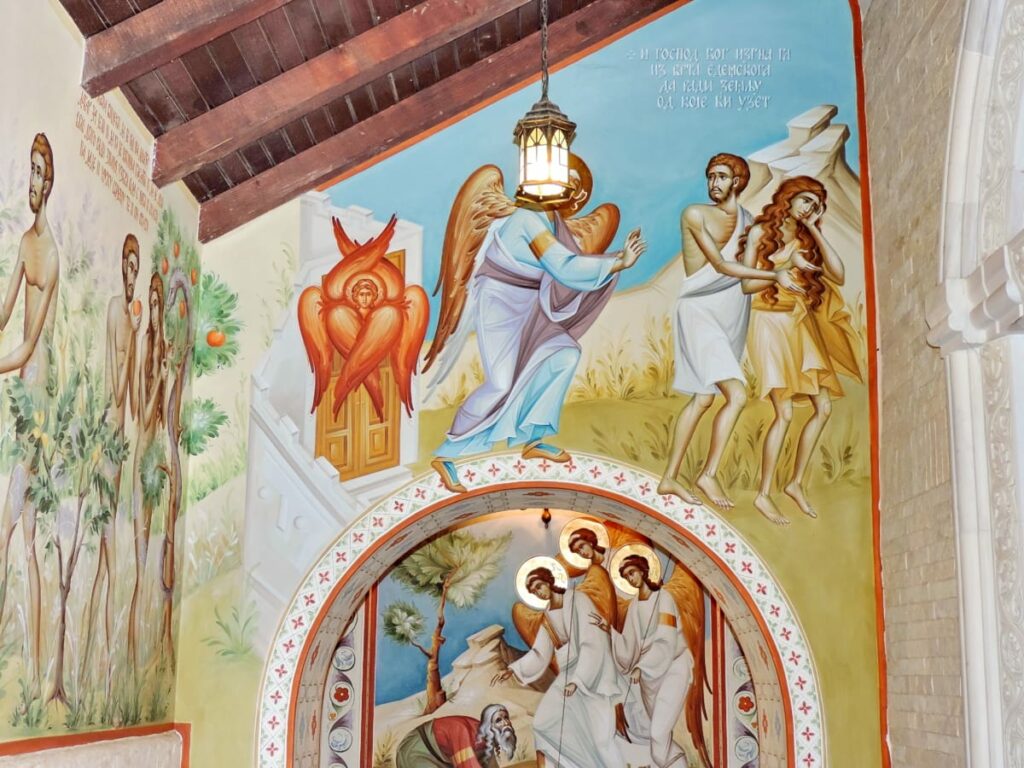
I. Date and Authorship Holy Tradition of the Orthodox Church, affirmed by the Fathers and the liturgical usage of the Church from the earliest centuries, attributes the Book of Genesis
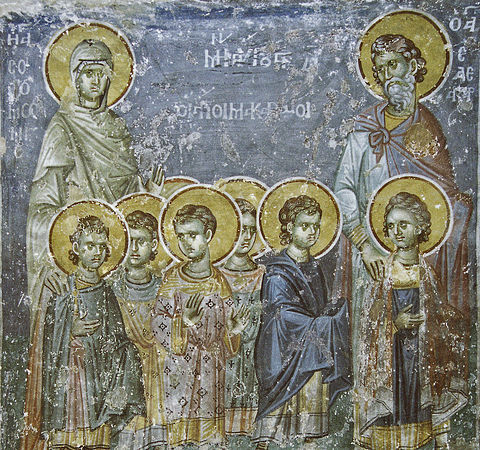
Does Hebrews 11 on the Maccabees Show Stronger Alignment with 4 Maccabees than 2 Maccabees? Hebrews 11 (the famous “Hall of Faith” chapter) does not explicitly mention the Maccabees by