Commentary on Genesis 8:8
The Sending Forth of the Dove
This verse, in which Noah sends forth a dove (Hebrew: yonah) to see if the waters had subsided from the face of the earth, carries profound typological significance that resonates throughout the scriptural and liturgical tradition of the Orthodox Church.
Christological and Baptismal Significance:
The dove sent over the waters immediately recalls the descent of the Holy Spirit “like a dove” upon Christ at His baptism in the Jordan (Matthew 3:16). The Fathers consistently read the Flood narrative as a type of baptism, and the dove becomes the connecting symbol between the old creation emerging from judgment and the new creation inaugurated in Christ. Just as the dove sought rest upon the renewed earth, so the Spirit descended and remained upon the Son of God, signifying that in Him humanity finds its true rest and renewal.
Saint Cyril of Jerusalem, in his Catechetical Lectures, draws attention to this parallel, noting that the dove at the Flood prefigured the dove at the Jordan. The waters of the Flood brought death to the old world of sin, while the waters of baptism bring death to the old man and resurrection to new life in Christ.
Patristic Interpretation:
Saint John Chrysostom observes that Noah’s patience in sending forth the dove demonstrates the virtue of discernment and trust in divine providence. The righteous man does not presume upon God’s timing but waits and tests the circumstances with wisdom. This becomes a model for the spiritual life, where the believer must learn to discern the movements of grace.
Saint Ambrose of Milan sees in the dove a figure of the Church herself, sent forth into the world to seek souls ready for salvation, returning to the ark (which is Christ and His Body) with the fruits of her mission.
Liturgical Connections:
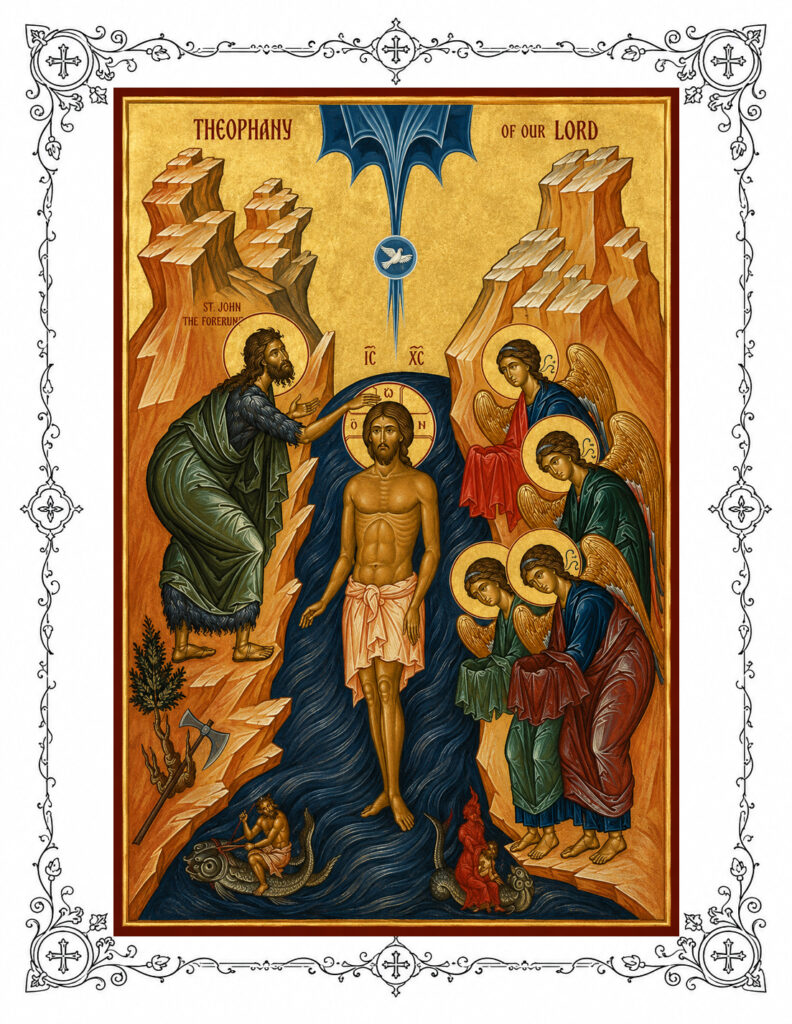
In the Orthodox celebration of Theophany, the blessing of waters explicitly recalls the Flood narrative. The prayers speak of water as both instrument of judgment and means of sanctification. The dove imagery permeates the hymnography of the feast, connecting Noah’s dove with the Spirit’s manifestation at Christ’s baptism.
The dove also appears in Orthodox iconography of the Baptism of Christ, depicted descending in rays of light, visually linking the Genesis account with the Gospel fulfillment.
Spiritual Application:
For the Orthodox faithful, the dove sent forth represents the soul’s longing for peace and rest in God. As the dove sought dry ground amid the receding chaos, so the Christian heart seeks the solid ground of Christ amid the turbulent waters of this fallen world. The ark remains our refuge, and the dove our hope that the waters of tribulation will indeed subside.