Introduction to the book of Leviticus
The Book of Leviticus receives its English title from the Latin Vulgate, which is derived from the Greek Septuagint (LXX) title Leuitikon (Λευιτικόν), meaning “Levitical” or “pertaining to the Levites.”
EOB: Official Site of the Eastern / Greek Orthodox Bible (Old and New Testament)
EOB (Eastern / Greek Orthodox Bible):
EOB Footnote:
KJV (King James Version):
WEB (World English Bible):
Benton LXX (Vaticanus):
Douai-Rheims (Vulgate):
Apostoliki Diakonia (LXX):
YLT (Young Literal Translation )(MT):
BBE (Bible in Basic English):
EOB Commentary:
Commentary on Genesis 8:9
The Dove Finding No Rest
This verse presents a profound image of the dove returning to Noah because she found no resting place for the sole of her foot. The waters still covered the earth, and the dove could find no solid ground upon which to alight. Noah stretches out his hand and brings her back into the ark, an act of tender reception that carries deep theological significance.
Typological Significance
The Fathers consistently read this passage as prefiguring the mystery of Christ and His Church. Saint John Chrysostom observes that just as the dove found no rest outside the ark and returned to Noah, so too the soul finds no true rest apart from Christ and His Church. The ark represents the Church, the only place of salvation amid the flood of sin and death that covers the fallen world.
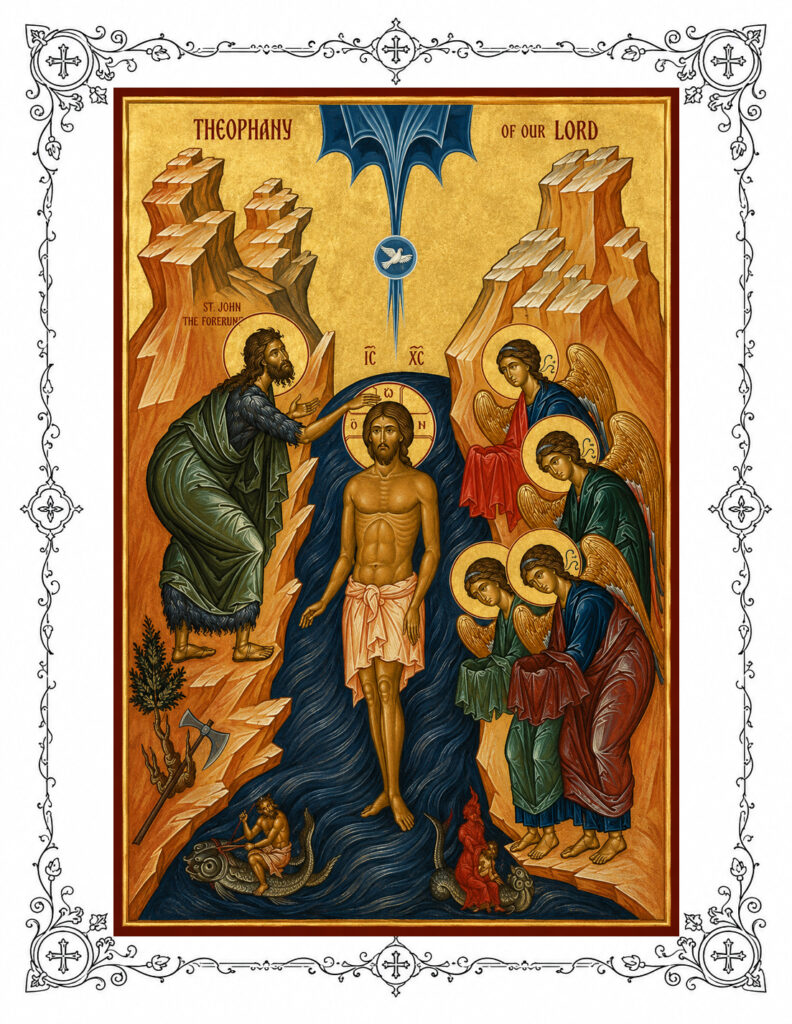
The dove herself has been understood as a type of the Holy Spirit. Just as the Spirit hovered over the waters at creation, so here the dove moves over the waters of judgment. When she finds no rest, this anticipates the Spirit’s descent upon Christ at His baptism, where at last the Spirit finds His perfect resting place in the incarnate Son. Saint Cyril of Jerusalem and other Fathers note this connection between the dove of Noah and the dove-like descent of the Spirit upon Jesus in the Jordan.
Noah Extending His Hand
The image of Noah putting forth his hand and drawing the dove into the ark is particularly striking. The Fathers see here a figure of Christ, who extends His saving hand to draw souls into the ark of the Church. This gesture of merciful reception echoes throughout Scripture, culminating in Christ’s outstretched hands upon the Cross, by which He draws all creation to Himself.
Liturgical Resonance
In the Orthodox baptismal rite, the waters are blessed and the candidate passes through them into new life, entering the ark of salvation. The prayer over the waters at Theophany recalls the flood and the dove, connecting these ancient events to the sanctification of all creation through Christ’s baptism.
Spiritual Application
For the Christian soul, this verse speaks to the restlessness of the heart that seeks peace in a world still submerged in corruption. Like the dove, we find no lasting rest in the things of this world. Our true rest is found only when we return to Christ, who receives us with His outstretched hand into the safety of His Church. As Saint Augustine famously expressed, our hearts are restless until they rest in God. The dove’s return to the ark beautifully illustrates this spiritual truth that guides Orthodox ascetical life and prayer.
The Book of Leviticus receives its English title from the Latin Vulgate, which is derived from the Greek Septuagint (LXX) title Leuitikon (Λευιτικόν), meaning “Levitical” or “pertaining to the Levites.”

The Book of Exodus receives its English title from the Greek Septuagint (LXX), where it is called Exodos (Ἔξοδος), meaning “departure” or “exit.” This name was chosen because the central

I. Date and Authorship Holy Tradition of the Orthodox Church, affirmed by the Fathers and the liturgical usage of the Church from the earliest centuries, attributes the Book of Genesis

Does Hebrews 11 on the Maccabees Show Stronger Alignment with 4 Maccabees than 2 Maccabees? Hebrews 11 (the famous “Hall of Faith” chapter) does not explicitly mention the Maccabees by