EOB: Official Site of the Eastern / Greek Orthodox Bible (Old and New Testament)

Genesis 9:11

EOB (Eastern / Greek Orthodox Bible):

I will make a promise with you: never again will all living things be wiped out by a flood, and there will never be another flood to ruin the earth.

EOB Footnote:

The MT includes the phrase “with you” (Hebrew: ‘ittekem) twice in this verse, whereas the LXX includes it only once. The MT reads “I establish my covenant with you” and later “neither shall all flesh be cut off again by the waters of the flood,” while the LXX has a single occurrence of “with you” in the first clause. This does not materially affect the overall meaning, as the covenant relationship is clearly established in both traditions.

Other Translations:

KJV (King James Version):

And I will establish my covenant with you; neither shall all flesh be cut off any more by the waters of a flood; neither shall there any more be a flood to destroy the earth.

WEB (World English Bible):

I establish my covenant with you: All flesh will not be cut off by the waters of the flood anymore, and there will never again be a flood to destroy the earth.

Benton LXX (Vaticanus):

“And I will establish my covenant with you; and all flesh shall not any more die by the water of a flood; and there shall no more be a flood to destroy all the earth.”

Douai-Rheims (Vulgate):

And I will establish my covenant with you, and all flesh shall be no more destroyed with the waters of a flood, neither shall there be from henceforth a flood to waste the earth.

Apostoliki Diakonia (LXX):

I will establish my covenant with you: Never again will all life be cut off by the waters of a flood; never again will there be a flood to destroy the earth.

YLT (Young Literal Translation )(MT):

“And I have established My covenant with you, and all flesh is not cut off any more by waters of a flood, and there is not any more a flood to destroy the earth.”

BBE (Bible in Basic English):

I will make my agreement with you, and never again will all flesh be cut off by the waters of a great flow, and there will never again be a great flow causing destruction to the earth.

EOB COMMENTARY:

EOB Commentary:

Genesis 9:11 – Commentary

The Divine Covenant and the Promise of Preservation

This verse stands as a pivotal moment in salvation history, marking God’s unconditional covenant with all creation following the catastrophic judgment of the Flood. The Lord’s promise never again to destroy the earth by water reveals the divine mercy that triumphs over judgment, a theme that resonates throughout Scripture and finds its ultimate expression in Christ.

Christological Significance:
The Fathers of the Church consistently interpreted the Flood narrative and its resolution as a type of baptism and salvation in Christ. Saint Peter explicitly connects the waters of the Flood to Christian baptism, stating that the ark prefigured the Church through which believers are saved (1 Peter 3:20-21). The covenant established here anticipates the New Covenant sealed in Christ’s blood, which offers not merely preservation from physical destruction but eternal salvation. Just as God promised never to destroy humanity by water, so in Christ He offers the promise of resurrection and incorruptible life.

Saint John Chrysostom emphasizes that this covenant demonstrates God’s philanthropia—His love for mankind—which remains constant despite human sinfulness. The unconditional nature of this promise, requiring nothing from Noah or his descendants, prefigures the grace freely given in Christ. God binds Himself to preserve creation, pointing toward His ultimate commitment to redeem it through the Incarnation.

Patristic Interpretation:
Saint Ephrem the Syrian notes that this covenant extends to all flesh, indicating God’s care for the entire created order. This cosmic dimension of salvation finds its fulfillment in Christ, through whom all things are reconciled (Colossians 1:20). The Fathers saw in this universal covenant a foreshadowing of the Gospel’s proclamation to all nations.

Liturgical Connections:
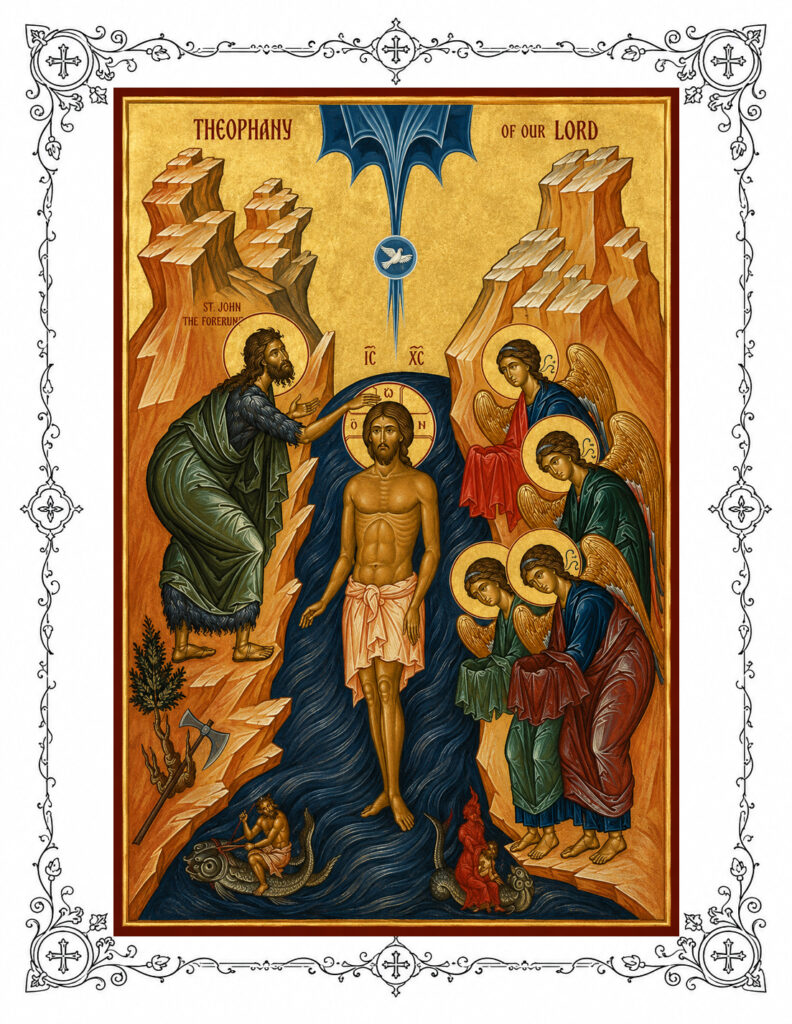
The blessing of waters at Theophany recalls this covenant, as the Church celebrates Christ’s baptism in the Jordan, which sanctified all waters. The prayers speak of water as both instrument of judgment and means of grace, transformed through Christ’s descent into the Jordan. The rainbow, given as the sign of this covenant, appears in Orthodox iconography surrounding the throne of God, symbolizing divine mercy and the fulfillment of all promises in the age to come.

Spiritual Application:
For the Orthodox believer, this verse offers profound assurance of God’s faithfulness. Though we deserve judgment for our sins, God in His mercy has established covenants of preservation and salvation. We are called to trust in His promises, knowing that He who preserved Noah will preserve the Church until the end of the age. The stability of creation itself testifies to divine faithfulness, inviting us to respond with thanksgiving and repentance.

Introduction to the book of Leviticus

The Book of Leviticus receives its English title from the Latin Vulgate, which is derived from the Greek Septuagint (LXX) title Leuitikon (Λευιτικόν), meaning “Levitical” or “pertaining to the Levites.”

Read More »

Introduction to the book of Exodus

The Book of Exodus receives its English title from the Greek Septuagint (LXX), where it is called Exodos (Ἔξοδος), meaning “departure” or “exit.” This name was chosen because the central

Read More »