Commentary on Genesis 9:15
The Divine Remembrance and the Covenant of Mercy
This verse presents God’s promise to “remember” His covenant, a profound theological concept that reverberates throughout salvation history. The divine remembrance (Hebrew: zakar) does not imply that God forgets and then recalls, but rather signifies His active, salvific intervention in creation. When God remembers, He acts to save.
Typological Significance for Christ and Baptism
The Fathers of the Church consistently interpreted the Noahic covenant and its sign as prefiguring the New Covenant established in Christ. Saint Cyril of Jerusalem, in his Catechetical Lectures, draws explicit parallels between the waters of the flood and the waters of baptism. Just as the flood waters destroyed the old sinful world while preserving Noah and his family in the ark, so baptismal waters destroy the old man of sin while raising the neophyte to new life in Christ.
The rainbow itself, spanning heaven and earth, becomes an image of Christ the Mediator who bridges the divine and human realms. Some Fathers saw in the rainbow’s appearance after the storm a type of Christ’s resurrection following His passion, the emergence of beauty and promise after the darkness of death.
Liturgical Connections
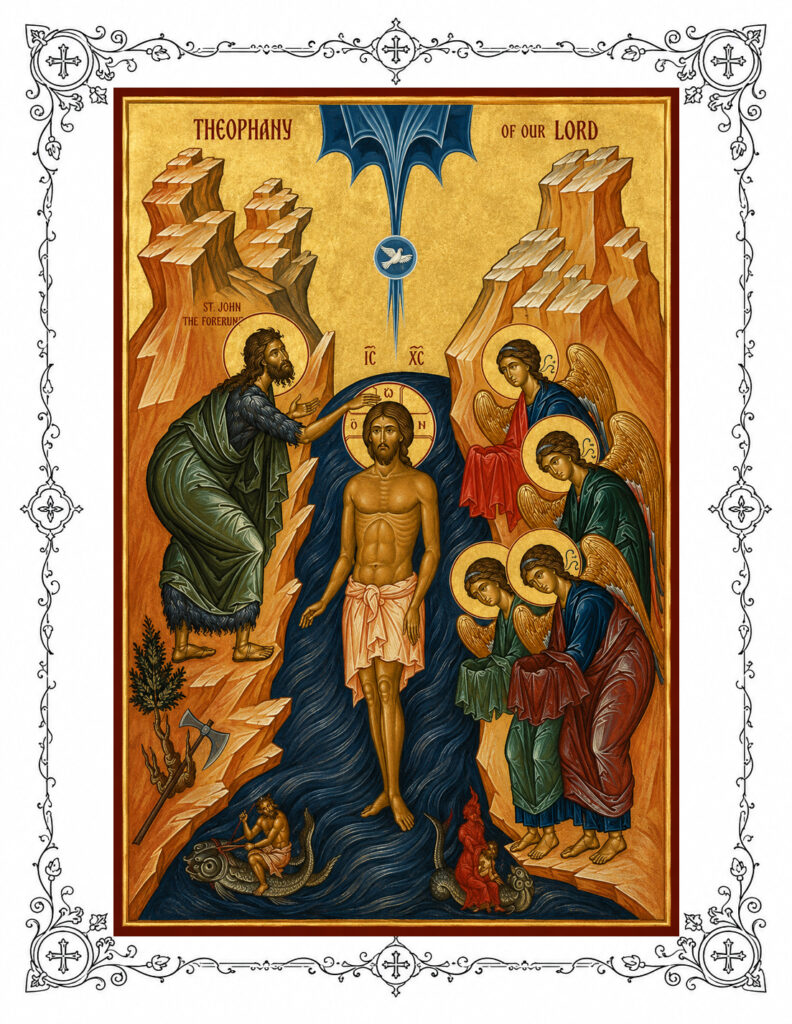
The Orthodox Church incorporates this covenantal theology into the blessing of waters at Theophany. The Great Blessing of Waters recalls God’s saving acts through water throughout history, including the preservation of Noah. The priest prays that the waters might become a source of blessing rather than destruction, echoing the promise given to Noah.
During the readings of Holy Saturday, the account of Noah and the flood is chanted as one of the fifteen Old Testament readings, placing this covenant within the broader narrative of salvation that culminates in Christ’s resurrection. The faithful hear how God preserved humanity through water, preparing them to understand how the baptismal waters of Pascha will bring them into the resurrected life.
Spiritual Application
For Orthodox spirituality, this verse teaches that God is faithful to His promises despite human unfaithfulness. The covenant with “all flesh” demonstrates the universal scope of divine mercy, anticipating the catholicity of the Church which embraces all nations. Saint John Chrysostom emphasizes that God condescends to bind Himself by covenant for our assurance, not because He needs reminding, but because we need the comfort of His sworn word.
The image of God looking upon the rainbow and remembering His covenant invites the faithful to trust in divine providence. Just as the rainbow appears precisely when storm clouds threaten, so God’s mercy is most present in times of trial. This covenantal faithfulness finds its ultimate expression in the Eucharist, where Christ perpetually remembers His covenant with humanity through His own Body and Blood.