Introduction to the book of Leviticus
The Book of Leviticus receives its English title from the Latin Vulgate, which is derived from the Greek Septuagint (LXX) title Leuitikon (Λευιτικόν), meaning “Levitical” or “pertaining to the Levites.”
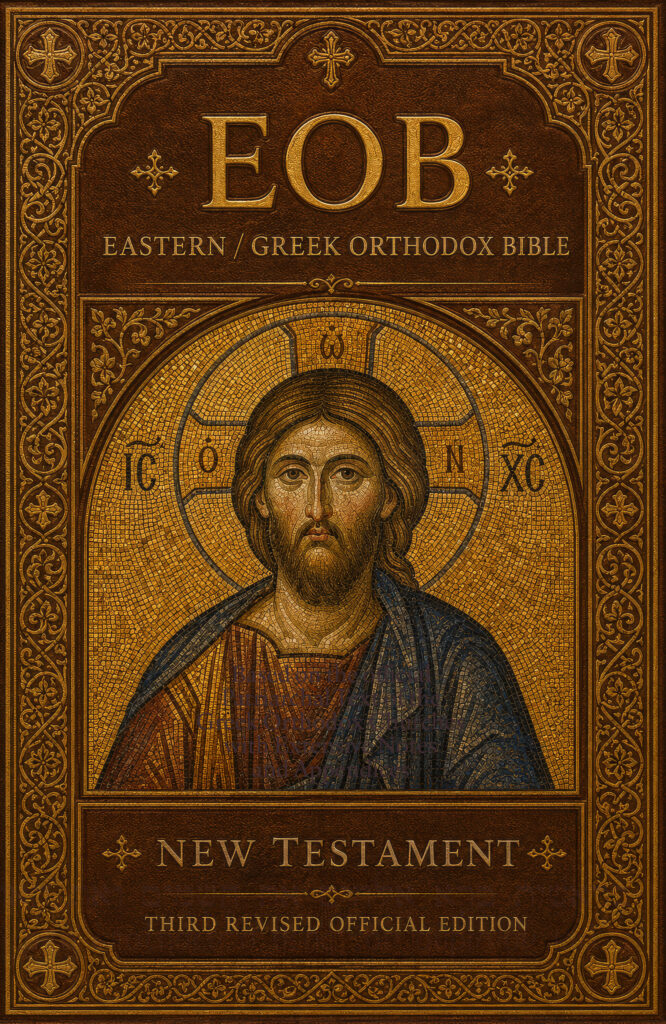
EOB: Official Site of the Eastern / Greek Orthodox Bible (Old and New Testament)
EOB (Eastern / Greek Orthodox Bible):
EOB Footnote:
KJV (King James Version):
WEB (World English Bible):
Benton LXX (Vaticanus):
Douai-Rheims (Vulgate):
Apostoliki Diakonia (LXX):
YLT (Young Literal Translation )(MT):
BBE (Bible in Basic English):
EOB Commentary:
Commentary on Genesis 9:17
God said to Noah, “This is the sign of the covenant which I have established between Me and all flesh that is on the earth.”
Theological Significance:
This verse concludes the divine discourse establishing the Noahic covenant, emphasizing God’s personal involvement in sealing this universal promise. The repetition of the covenant formula underscores its permanence and God’s faithfulness. Here we see the Lord Himself interpreting the sign He has given, teaching Noah—and through him all humanity—to read creation sacramentally, as bearing divine meaning beyond its natural appearance.
Christological Reading:
The Fathers understood this covenant as a type pointing toward the New Covenant in Christ. Just as God established peace with all flesh through Noah, so through Christ the eternal covenant of salvation extends to all humanity. Saint John Chrysostom notes that God’s condescension in speaking directly to Noah prefigures the greater condescension of the Incarnation, where God not merely speaks to humanity but becomes human. The rainbow, stretching between heaven and earth, becomes an image of Christ the Mediator, who bridges the divine and human natures in His own Person.
Patristic Interpretation:
Saint Ephrem the Syrian observes that God’s declaration “I have established” (Greek: diatithemai) uses covenantal language that resonates with Christ’s words at the Last Supper regarding the New Testament in His blood. The covenant with Noah thus stands as preparation for the Eucharistic covenant. Saint Cyril of Jerusalem, in his Catechetical Lectures, connects the waters of the flood with baptism, noting that just as Noah passed through water to a renewed world under covenant blessing, so Christians pass through baptismal waters into the New Covenant.
Liturgical Connections:
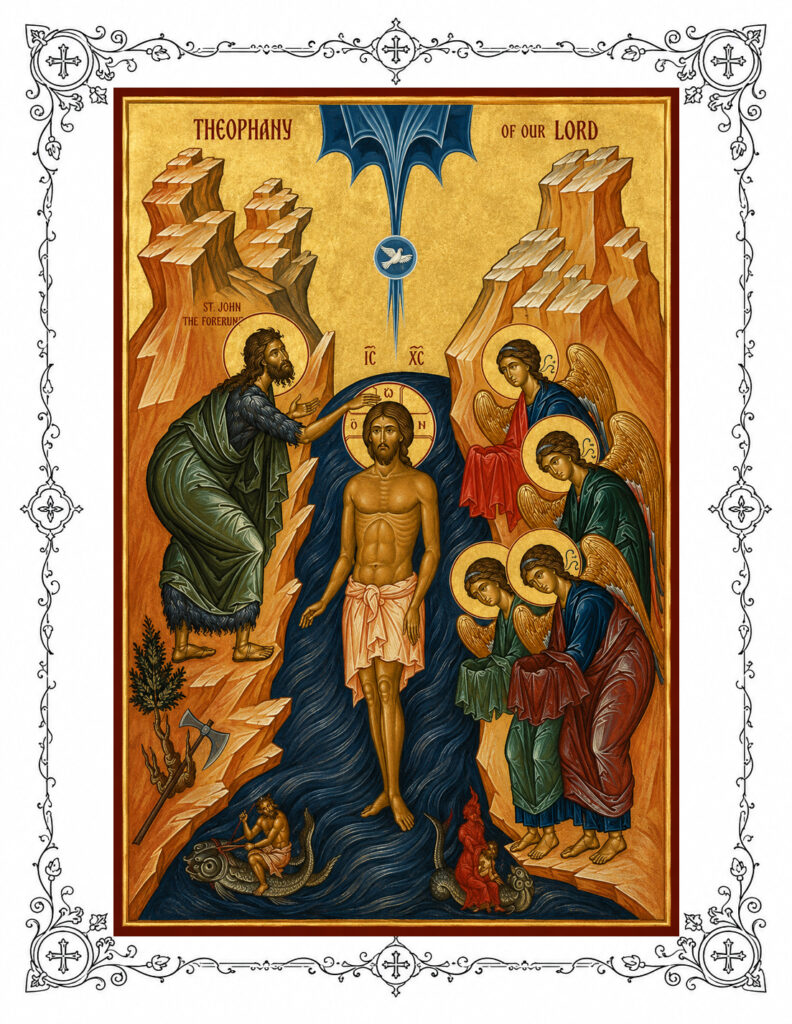
This passage is read during the Vesperal Liturgy of Theophany, where the Church celebrates Christ’s baptism in the Jordan. The connection is profound: the waters that once brought judgment now become the means of blessing and new life. The prayers of the Great Blessing of Waters echo this theme, asking God to grant the baptismal waters the same grace that transformed the flood from destruction to salvation.
Spiritual Application:
For Orthodox spirituality, this verse teaches us to perceive God’s presence in creation. Every rainbow becomes an occasion for remembering divine mercy and covenant faithfulness. The Fathers encourage believers to develop this sacramental vision—seeing in natural phenomena reminders of God’s promises and His saving work. This contemplative reading of creation forms part of theoria physike, the spiritual perception of God’s logoi embedded in all things, leading the soul toward union with the Creator.
The Book of Leviticus receives its English title from the Latin Vulgate, which is derived from the Greek Septuagint (LXX) title Leuitikon (Λευιτικόν), meaning “Levitical” or “pertaining to the Levites.”

The Book of Exodus receives its English title from the Greek Septuagint (LXX), where it is called Exodos (Ἔξοδος), meaning “departure” or “exit.” This name was chosen because the central

I. Date and Authorship Holy Tradition of the Orthodox Church, affirmed by the Fathers and the liturgical usage of the Church from the earliest centuries, attributes the Book of Genesis

Does Hebrews 11 on the Maccabees Show Stronger Alignment with 4 Maccabees than 2 Maccabees? Hebrews 11 (the famous “Hall of Faith” chapter) does not explicitly mention the Maccabees by