Commentary on Genesis 9:29
The Death of Noah and the Completion of an Era
This verse marks the conclusion of Noah’s earthly sojourn, recording his death at nine hundred and fifty years. While appearing as a simple genealogical notation, this passage carries significant theological weight within the Orthodox understanding of salvation history.
Noah as a Type of Christ: The Fathers consistently saw Noah as a prefigurement of Christ. Saint John Chrysostom notes that just as Noah preserved humanity through the waters of the flood, so Christ saves humanity through the waters of baptism. Noah’s death, therefore, marks not merely the end of a righteous man’s life but the passing of one who bore the image of the coming Savior. His long life of nearly a millennium represents the patience and longsuffering that God extends to humanity, a theme that finds its ultimate expression in Christ’s redemptive work.
Patristic Interpretation: Saint Ephrem the Syrian observes that Noah lived three hundred and fifty years after the flood, witnessing the repopulation of the earth and the beginning of new nations. This extended life allowed him to serve as a living witness to both the judgment and mercy of God. The Fathers saw in this a pastoral dimension, as Noah could personally testify to subsequent generations about divine justice and compassion.
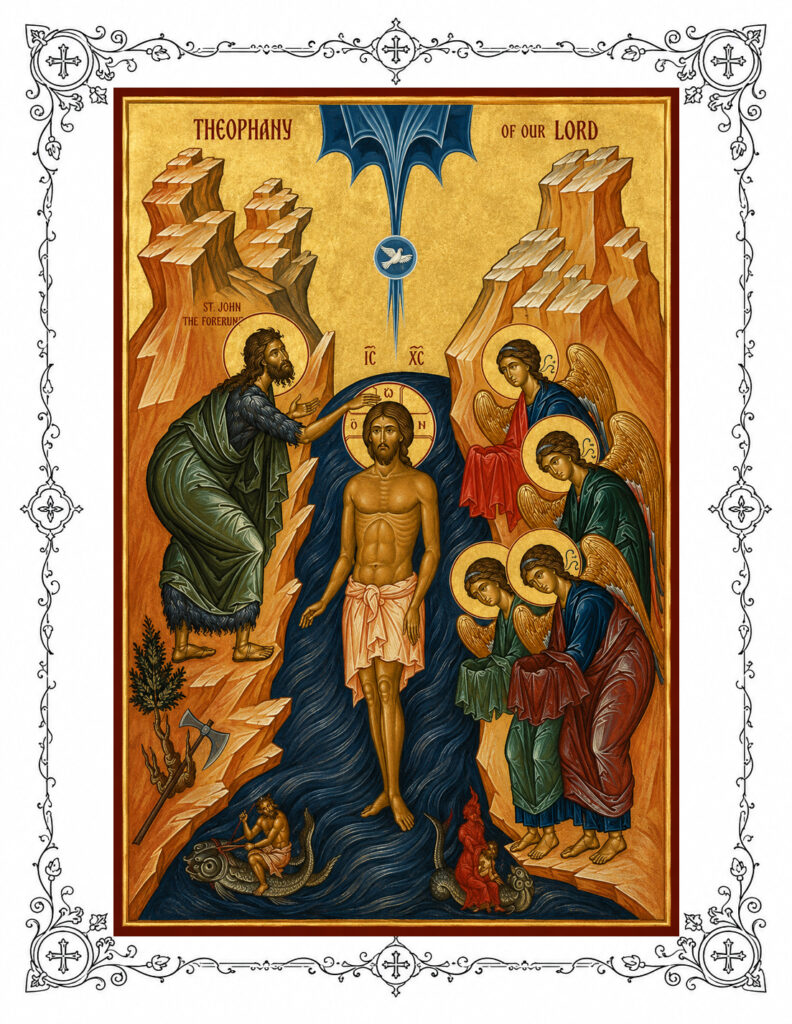
Liturgical Connections: In the Orthodox liturgical tradition, Noah appears in the prayers of Great Saturday, where the Church commemorates Christ’s descent into Hades. The connection between Noah’s ark and the Church is explicitly drawn in hymnography, particularly during Theophany, when the blessing of waters recalls the flood as a type of baptismal regeneration. Noah’s death reminds us that even the righteous of the Old Covenant awaited the coming of Christ to enter into the fullness of life.
Spiritual Significance: For Orthodox spirituality, Noah’s complete lifespan demonstrates the blessing that accompanies righteousness. Having walked with God and found grace in His sight, Noah completed his days in peace. This offers encouragement to the faithful that a life lived in obedience to God, though it may pass through tribulation and judgment upon the world, ultimately concludes in blessed repose.
The verse also subtly points forward to the mortality that continues even after the flood. Despite the renewal of creation, death still reigns, awaiting the final victory accomplished by Christ. Noah’s death thus stands as a reminder that the flood, while cleansing the earth, did not ultimately defeat death itself. This awaited the true Ark of salvation, the incarnate Lord, who would descend into death and emerge victorious, granting life to all who enter into Him through holy baptism.