EOB: Official Site of the Eastern / Greek Orthodox Bible (Old and New Testament)

Genesis 9:8

EOB (Eastern / Greek Orthodox Bible):

Then God spoke to Noah and his sons who were with him:

EOB Footnote:

The MT includes “and to his sons with him” after “God spoke to Noah,” which is reflected in most LXX witnesses. Codex Alexandrinus reads simply “God spoke to Noah,” omitting the reference to his sons at this point, though the sons are addressed in the following verses.

Other Translations:

KJV (King James Version):

And God spake unto Noah, and to his sons with him, saying,

WEB (World English Bible):

“God spoke to Noah and to his sons with him, saying,”

Benton LXX (Vaticanus):

And God spoke to Noe, and to his sons with him, saying,

Douai-Rheims (Vulgate):

And God said to Noe, and to his sons with him:

Apostoliki Diakonia (LXX):

God said to Noah and to his sons with him, “As for me, I now establish my covenant with you and with your descendants after you.”

YLT (Young Literal Translation )(MT):

And God speaks to Noah and to his sons with him, saying,

BBE (Bible in Basic English):

“I will make my agreement with you and with your seed after you,”

EOB COMMENTARY:

EOB Commentary:

Genesis 9:8 – Commentary

The Divine Initiative in Covenant

This verse marks a pivotal moment in salvation history, as God initiates speech directly with Noah and his sons following the catastrophic flood. The phrase “Then God spoke to Noah and to his sons with him” emphasizes the divine condescension—God reaching down to humanity to establish relationship and promise. This pattern of God speaking first, initiating covenant before any human action or merit, becomes the template for all subsequent divine-human encounters throughout Scripture.

Typological Significance for Christ and the Church

The Fathers consistently saw Noah as a type of Christ, and this covenantal moment prefigures the New Covenant established through our Lord. Just as God spoke to Noah after the waters of judgment had passed, so too does the Father speak through the Son after humanity passes through the waters of baptism into new life. Saint John Chrysostom notes that Noah, having been saved through water and wood (the ark), foreshadows how believers are saved through baptismal water and the wood of the Cross.

The inclusion of Noah’s sons in this address is significant. God does not speak to Noah alone but extends His word to the entire family—the remnant of humanity. This corporate dimension anticipates the Church, where God’s covenant word is addressed not merely to individuals but to the whole Body of Christ gathered together.

Liturgical and Spiritual Connections

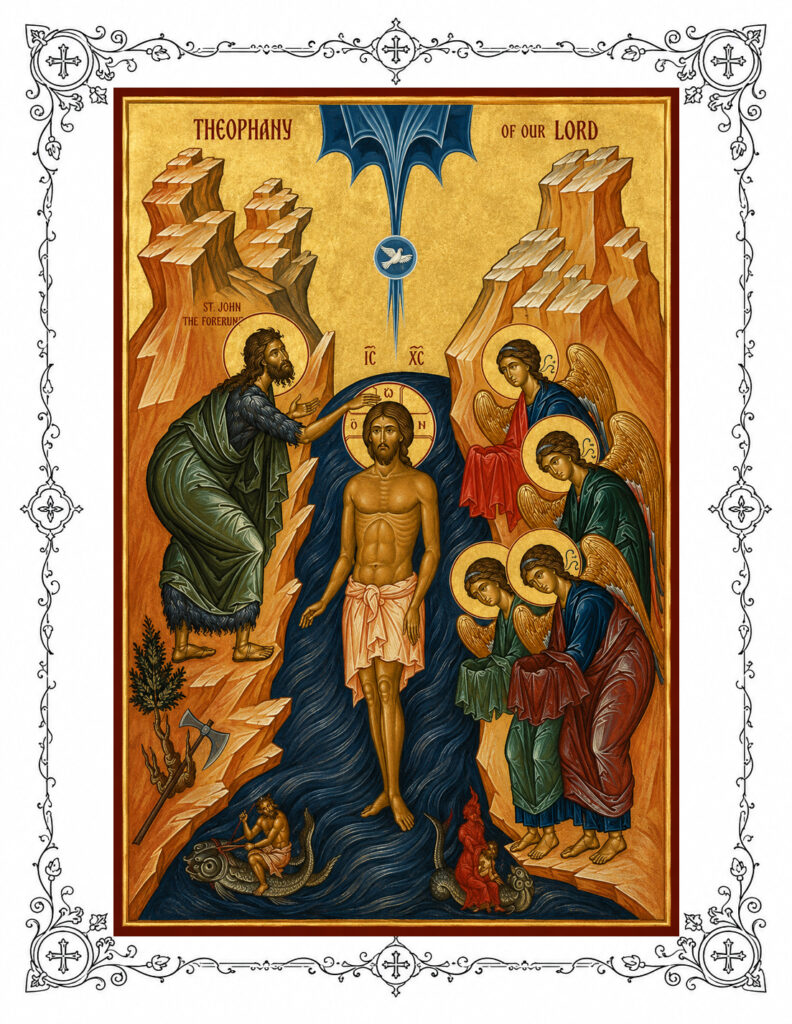
The Orthodox Church reads from the flood narrative during the Great Blessing of Waters at Theophany, drawing explicit connections between the flood waters and baptismal regeneration. The covenant God initiates in this passage finds its fulfillment in the baptismal covenant, where the newly illumined are incorporated into Christ’s death and resurrection.

The Fathers also emphasize that this moment represents a new beginning for creation itself. Having emerged from the ark—which Saint Cyprian and others identify as a type of the Church—Noah and his family stand as the firstfruits of a renewed humanity. God’s speaking to them establishes not merely a legal contract but a living relationship, echoing the original communion between Creator and creature in Eden.

This verse reminds Orthodox Christians that salvation is always initiated by God’s grace. We do not ascend to God; rather, He descends to us, speaking His word of promise and life. The spiritual life begins not with human effort but with attentive hearing of the divine voice, just as Noah and his sons received God’s word in humble silence before the covenant terms were revealed.

Introduction to the book of Leviticus

The Book of Leviticus receives its English title from the Latin Vulgate, which is derived from the Greek Septuagint (LXX) title Leuitikon (Λευιτικόν), meaning “Levitical” or “pertaining to the Levites.”

Read More »

Introduction to the book of Exodus

The Book of Exodus receives its English title from the Greek Septuagint (LXX), where it is called Exodos (Ἔξοδος), meaning “departure” or “exit.” This name was chosen because the central

Read More »